
Sometimes the simplest routines are still the smartest ones.

Life today is engineered for convenience—apps remind us, machines clean for us, and subscriptions deliver whatever we forgot to buy. But in the rush to modernize, many of the old ways were quietly discarded, even though they solved problems with less stress and more charm.
Some of those habits, often dismissed as relics, still hold up. In fact, they might be exactly what we need to cut through the noise. Here are thirteen “old-fashioned” routines that make life noticeably easier.
1. Writing grocery lists by hand.

A paper list may look quaint next to a sleek phone app, but there’s a subtle magic in writing things down. The act of jotting creates memory reinforcement, making you less likely to forget the essentials. It also forces you to slow down and consider what you actually need before stepping into a store.
Unlike a buzzing device, a list doesn’t pull you into texts or notifications. It keeps you focused, practical, and surprisingly efficient during errands.
2. Hanging clothes out to dry.

Stringing laundry on a line seems like a throwback, but it’s a small luxury in disguise. Sunlight naturally freshens fabric, and the air leaves clothes softer without the static of a dryer sheet. You’re not just saving on energy costs—you’re stretching the lifespan of your wardrobe.
There’s also the ritual itself. Hanging clothes outdoors is grounding, a moment of pause in an otherwise frantic day. The result is fabric that smells like the breeze and a calmer you.
3. Cooking meals at home.

Delivery apps promise speed, but cooking offers something they can’t: control. At home, you decide the ingredients, the portions, and the flavors. It’s healthier and cheaper, but also a daily practice that reconnects you with the food you eat.
Even simple recipes create a rhythm that restores balance after long hours. Cooking isn’t just about sustenance; it’s about shaping your environment into one that feels intentional instead of outsourced.
4. Using cash instead of cards.

Plastic makes it too easy to forget the value of money. Cash, on the other hand, has weight. Watching bills leave your wallet creates awareness—each purchase becomes deliberate rather than abstract.
Many people still swear by the envelope system: dividing cash into categories and refusing to overspend once it’s gone. It’s tactile budgeting, and while it may look antiquated, it works because it forces discipline without the temptations of credit.
5. Writing thank-you notes.

In a world of auto-filled emails and quick emojis, a handwritten note lands differently. It shows care, effort, and intention. The recipient doesn’t just read your words—they see the time you took to choose stationery, write neatly, and send it.
For you, the process builds gratitude. Sitting with pen and paper makes you reflect longer than a tap on a screen. This small ritual turns acknowledgment into something tangible and lasting.
6. Keeping a physical calendar.

Digital calendars may sync across devices, but a wall calendar has an elegance they lack. Hanging one in a visible place organizes the entire household at a glance. Each marked square is a public reminder, not a private ping.
There’s also something about the tactile act of crossing out days or circling an event. It engages memory differently, helping you actually remember rather than rely on yet another alert.
7. Reading actual newspapers or books.

Screens scatter your attention, mixing headlines with endless distractions. Paper does the opposite—it slows you down and anchors your focus. Reading the morning news in print feels deliberate, and a book keeps you immersed without notifications pulling you out.
Studies back this up: comprehension and retention are often stronger with print. Beyond the science, there’s also the romance of folding a paper or flipping pages, an experience no glowing screen quite replicates.
8. Preserving food at home.
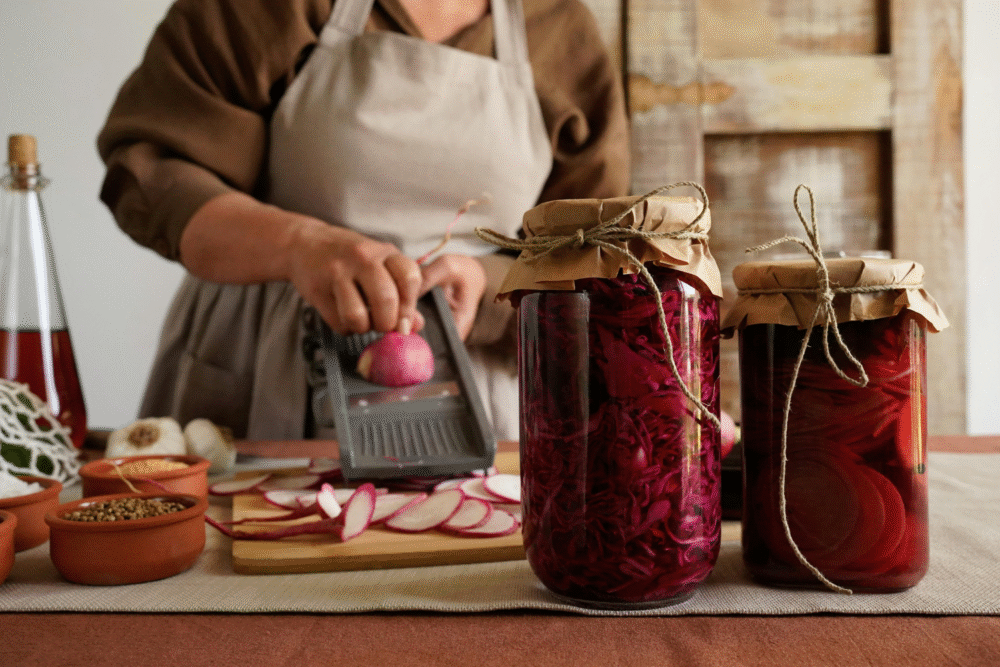
Freezers, canning jars, and pickling spices once meant survival; today, they’re a practical way to stretch dollars and reduce waste. Buying produce in bulk and preserving it turns seasonal abundance into year-round convenience.
It’s also deeply satisfying. There’s pride in opening a jar of jam you made months ago, knowing it came from your own effort. That sense of continuity—of preparing for the future—is an old rhythm that feels surprisingly modern again.
9. Walking instead of driving short distances.

Cars may save time, but walking transforms those short trips into moments of clarity. A ten-minute stroll lowers stress, boosts circulation, and clears mental clutter better than idling in traffic.
It also reshapes your relationship with your environment. You notice details—trees in bloom, shifting seasons—that you miss behind the wheel. Walking is slower, yes, but it’s restorative in ways a car ride never will be.
10. Handwashing dishes.

Dishwashers handle piles, but handwashing has its own quiet benefits. It makes you careful with delicate plates, and when done thoughtfully, it can actually use less water than a full cycle.
More importantly, the process is meditative. Warm water, soap, and the rhythm of scrubbing offer a pause between tasks. Instead of rushing past the chore, you turn it into a moment of calm reflection.
11. Repairing instead of replacing.

Older generations fixed what broke—sewing seams, gluing furniture, or tinkering with appliances. That habit saved money and kept belongings out of the landfill. Today, it’s both eco-friendly and empowering.
Learning to repair things teaches patience and problem-solving. There’s a quiet satisfaction in extending the life of something instead of discarding it. Repair culture isn’t nostalgia—it’s sustainability dressed as common sense.
12. Cooking with cast iron.

Cast iron pans look heavy and outdated compared to sleek nonstick cookware, but they’re almost indestructible. With proper care, a single pan can last decades, absorbing flavors and building a natural nonstick surface.
Cooking with cast iron also connects you to a slower rhythm. Meals come out hearty, evenly cooked, and infused with tradition. What some dismiss as clunky cookware feels timeless in practice.
13. Keeping face-to-face conversations alive.

In the age of texts and voice notes, sitting down for an in-person chat feels revolutionary. The nuances of expression, tone, and body language can’t be replaced by screens.
Face-to-face conversations create deeper bonds and cut through misunderstandings. They require presence, not multitasking, and they remind you that connection doesn’t need Wi-Fi—it needs attention.