
A strategy that works perfectly until the day it disastrously doesn’t.

For years, the stock market has followed a simple and incredibly profitable script: every time the market drops, it’s a golden opportunity to “buy the dip.” This mindset, which rewards investors for buying into downturns, has become a deeply ingrained reflex for a whole generation of traders. It’s a strategy that has been consistently validated by a market that has always seemed to bounce back stronger.
But what happens when the music stops? There are several growing problems with this seemingly foolproof strategy that could spell trouble ahead.
1. It ignores when the fundamentals have actually changed.

The buy-the-dip strategy is based on the assumption that any downturn is just a temporary blip in a fundamentally strong and upward-trending market. The danger is that this becomes an automatic reflex, causing investors to ignore the warning signs when the underlying economic reality has genuinely changed for the worse.
A company facing a true long-term decline in its business or a market heading into a prolonged recession is not just a “dip.” In these cases, buying the dip is not a savvy move; it’s a dangerous attempt to catch a falling knife.
2. The strategy was built for a zero-interest-rate world.
For over a decade, the Federal Reserve kept interest rates near zero, creating a “TINA” (There Is No Alternative) environment for investors. With savings accounts yielding nothing, the stock market was the only game in town, which provided a constant flow of cash to prop up every dip. That era is over.
In the higher-interest-rate world of 2025, safe assets like bonds and high-yield savings accounts offer a real, competitive return. This means there is less “free cash” looking for a home, making the automatic, V-shaped recovery from every dip much less of a sure thing.
3. It creates dangerous market bubbles in popular stocks.

When everyone is conditioned to buy every small drop, it prevents the market from having normal, healthy corrections. This is especially true for the small handful of mega-cap tech stocks that have driven the majority of the market’s gains. The constant influx of dip-buying cash can push the valuations of these popular stocks to unsustainable, bubble-like levels.
This creates a market that is increasingly disconnected from the real-world earnings and performance of the companies. It fosters a fragile and top-heavy structure where the eventual correction, when it comes, could be much more severe.
4. It discourages proper portfolio diversification.

The buy-the-dip mindset has been most spectacularly rewarded by betting on a very narrow slice of the market, particularly big tech stocks. This has taught investors a dangerous lesson: to concentrate their money in the few things that are working, rather than spreading it across various asset classes and geographic regions.
This lack of genuine diversification is a huge, unappreciated risk. When the handful of stocks that everyone owns finally enters a real, prolonged downturn, investors who have been conditioned to just buy that one dip will be dangerously exposed, with no other assets to cushion the blow.
5. It fosters a sense of complacency and underrates risk.

Perhaps the biggest future problem is psychological. A strategy that has worked for more than a decade has created a powerful sense of complacency. A generation of investors has been trained to believe that market downturns are not a source of risk, but a guaranteed opportunity. They have never experienced a true, multi-year bear market where buying the dip fails repeatedly.
This mindset encourages investors to take on more risk than they can truly handle, believing they will always be saved by a quick rebound. When a real, sustained downturn eventually arrives, this complacency could lead to panic and catastrophic losses.
6. It shortens investment horizons and encourages trading.
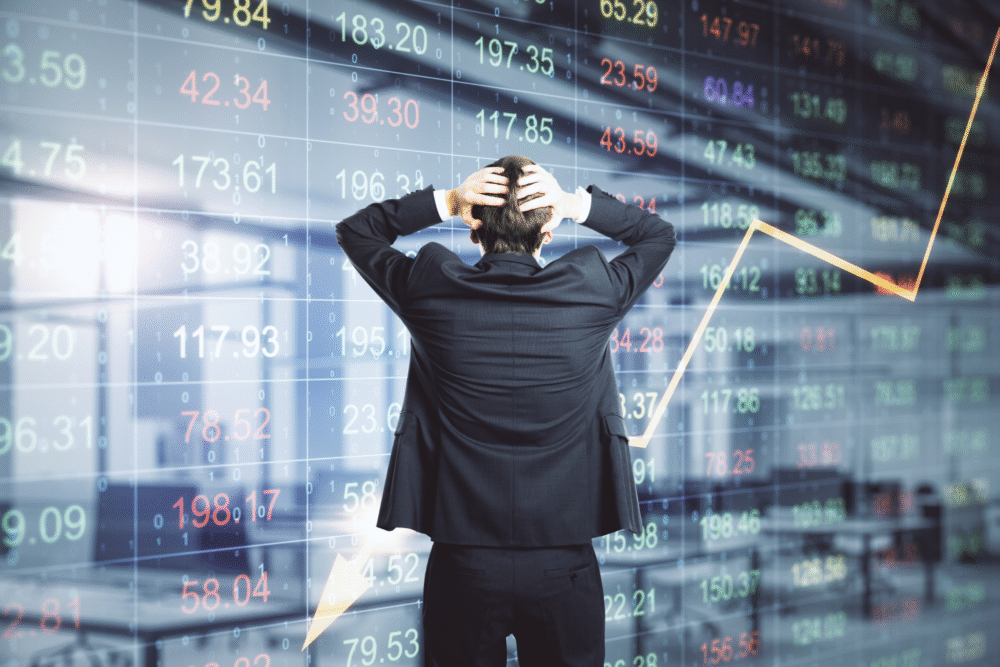
The BTD mindset, with its constant focus on short-term market fluctuations, subtly transforms investors into traders. The goal becomes successfully timing the bottom of a minor correction for a quick profit, rather than focusing on a company’s long-term value and holding it for years. This encourages a short-term, almost gambling-like mentality toward the market.
This can be dangerous because it leads to over-trading and can cause people to panic and sell when a dip doesn’t immediately bounce back. It’s the opposite of the patient, long-term approach that has historically been the most reliable path to building wealth.
7. It can lead to throwing good money after bad.

The classic advice for a falling stock is to not “average down,” or buy more as the price drops. The buy-the-dip mentality is essentially a market-wide version of averaging down. While it has worked for the market as a whole, it can be a devastating strategy when applied to individual stocks that are in a true decline.
An investor who keeps buying the dip in a company whose business is fundamentally broken is not being savvy; they are simply increasing their exposure to a losing bet. The BTD mindset can blur the line between a healthy market correction and a failing individual company.