

There is a peculiar kind of financial trap that does not look like a trap at all. It looks like success. It looks like a shiny car in the driveway, a boutique gym selfie on Instagram, or a designer bag sitting on a marble countertop. These things scream “I’ve made it” to the outside world, while quietly draining the life out of your bank account.
The brutal truth is that many of today’s most coveted status symbols are not signs of wealth. They are signs of wealth leaving you. Slowly, silently, and often with your enthusiastic approval. So let’s dive in.
1. The Luxury Car That Depreciates Faster Than Your Confidence
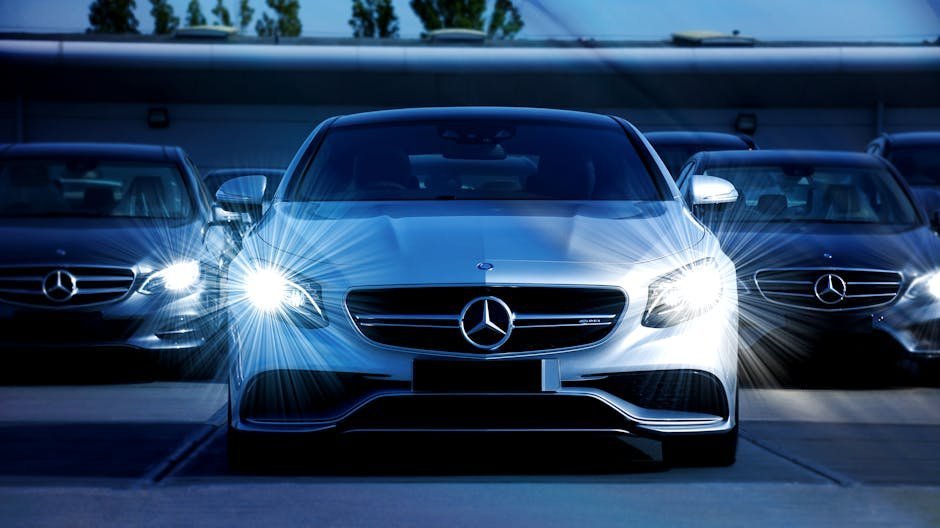
Let’s be real about what a luxury car actually costs you. Total ownership costs for luxury vehicles often range from $15,000 to $30,000 per year, depending on the vehicle type, usage, and location. That is not the sticker price. That is just keeping the thing alive.
Depreciation is consistently the biggest ownership cost for luxury vehicles. While mass-market cars lose value steadily, luxury models often depreciate faster due to higher starting prices and rapid technology cycles. Luxury sedans and SUVs may lose between 45 and 60 percent of their value within just five years. Think about that: you could buy a $100,000 car today and be left holding a $45,000 asset in five years.
The money spent on cars could instead be invested in real estate or stocks. The money that would have been invested in the stock market back in 2013 is now worth more than quadrupled in 2025. The opportunity cost is staggering. Every time you upgrade your ride for the image, you are trading future wealth for present perception.
From a purely financial standpoint, luxury vehicles rarely make sense as cost-efficient transportation. Honestly, that is not even controversial. The math simply does not work in your favor unless your net worth genuinely supports it.
2. The Oversized Home Nobody Actually Needs
Housing represents the largest expense for most families, and consequently, housing decisions have the potential to substantially affect economic outcomes. That sounds obvious. Yet millions of people still make the most financially destructive housing decisions of their lives in pursuit of square footage as a status symbol.
According to estimates based on newly released American Community Survey data, 43.5 million households were cost burdened in 2024, dedicating more than 30 percent of their income each month to housing costs. These are not reckless spenders. Many of them simply bought more house than they needed.
Higher mortgage rates, property taxes, insurance premiums, and utility bills have made large homes significantly more expensive to maintain in 2026. Heating, cooling, and repairing expansive spaces require ongoing financial commitment, especially as energy prices fluctuate. A big house is not just a big mortgage. It is a constant cash bleed from every direction.
In 2026, the long-standing appeal of oversized houses is facing renewed scrutiny across the United States. Rising ownership costs, changing lifestyles, and environmental concerns are prompting many households to rethink how much space they truly need. While large properties were once viewed as clear symbols of financial success, practical realities are reshaping that perspective.
3. Designer Labels and Luxury Fashion You Barely Wear
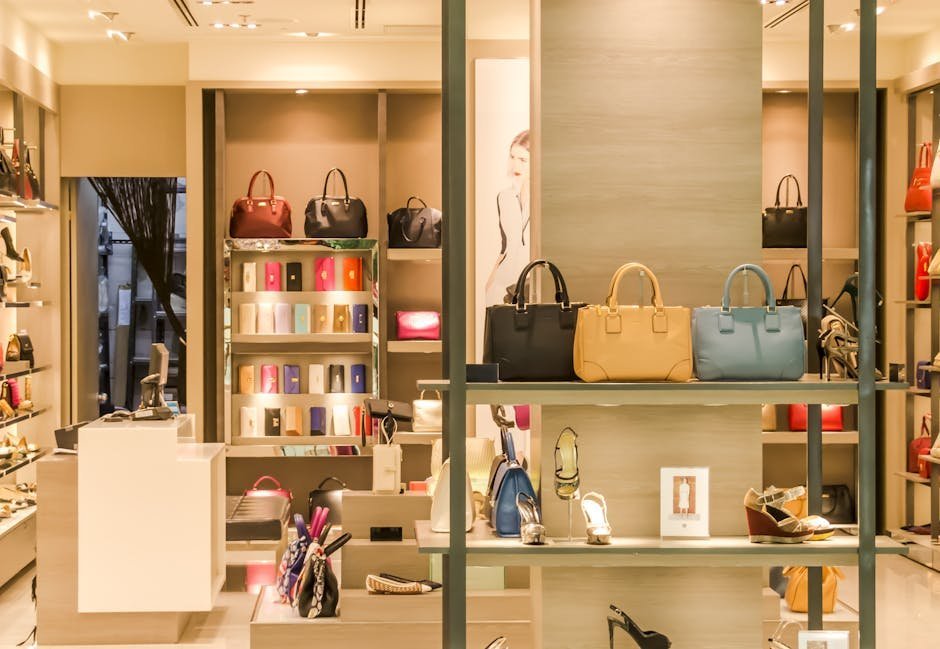
I think most people already suspect this one, but the numbers are genuinely shocking. Fifty million luxury consumers exited the market between 2022 and 2024, according to a report from Bain & Company. Even the people who could afford it started saying: enough.
Brands like Dior, Estée Lauder, Louis Vuitton, and Burberry took a huge hit as customers grew fed up with expensive items they found uninspiring. The shine has worn off. You are paying a fortune for a logo, and increasingly, the logo means less than it used to.
Status symbols have transformed from the obvious logomania trend of the 2010s to more subtle portrayals of wealth in recent years. From the appliances on your counter to the perfume in your bathroom, displays of wealth have become more casual yet just as expensive. The game shifted, but the price tag stayed. That is a losing trade for your wallet.
Buying a Prada bag or Jimmy Choo heels says nothing personal about the consumer. Since knockoffs are so accessible and clothing has become uninspiring, the era of logo-driven signaling is fading fast. You are spending real money on something that no longer even reliably signals what you think it signals.
4. The Boutique Fitness Obsession

Here is a category where status and self-improvement collide in the most expensive way possible. Empower Personal Dashboard data reveals that gym membership spending saw a 19 percent jump from 2024 to 2025, with Americans spending $101.80 a month on average. And that is just the average.
The average cost of a monthly gym membership can run anywhere between $10 for budget gyms to $500 for luxury gyms or boutique studios, with prices varying drastically depending on location, amenities, and perks. People are stacking SoulCycle on top of Pilates on top of a regular gym membership. It adds up to thousands per year, very fast.
A growing segment of the population holds multiple fitness memberships, such as a traditional gym plus a boutique studio and a digital subscription, highlighting that fitness consumers are layering experiences to meet their needs. Part of this is genuine health commitment. A big part of it, though, is pure social signaling. Nothing says “I’m doing well” quite like a Pilates reformer class at $45 a pop.
The annual gym member retention rate is just 66.4 percent, meaning roughly one in three members leave each year. Fully half of new members quit within their first six months. You are not just paying for what you use. You are mostly paying for what you do not.
5. The Fashion Subscription Box Trap

Subscription boxes feel harmless. Twenty dollars here, forty dollars there. But the industry has exploded into something genuinely massive. The Global Fashion and Clothing Subscription Boxes Market was valued at USD 13 billion in 2024 and is projected to reach a market size of USD 20 billion by the end of 2030. Someone is paying for all that growth. Likely you.
Approximately 45 percent of subscribers remain loyal to their fashion subscription box service for over a year, indicating strong customer retention in the industry. That loyalty sounds like a positive. Flip it around, though: you are automatically billed month after month, often for items you did not specifically choose and might not wear.
The average return rate for items in fashion subscription boxes is around 25 percent, underscoring the need for accurate personalization to meet customer preferences. So roughly one in four items gets sent back. Yet the subscription fee stays. You are essentially paying a monthly premium for the privilege of participating in a shopping experience that only partly delivers what you actually want.
Here’s the thing about subscriptions in general: they exploit a well-known psychological quirk. Recurring charges feel smaller and less painful than one-time purchases. Stack four or five of them together, though, and you have created a slow drain on your finances that is very easy to ignore and very hard to outrun.
6. The “House Poor” Renovation Spiral

Owning a beautiful, upgraded home is a powerful social signal in 2026. Walk-in closets, chef’s kitchens, spa bathrooms. Gorgeous on Instagram. Brutal on your bank account. Homeowners are estimated to have spent $485 billion on renovations in 2024, up from $363 billion in 2020. That is not a small number.
Housing costs rose over 14 percent between September 2023 and September 2025, per Bureau of Labor Statistics data. Renovating on top of surging base costs is a double financial squeeze. You are spending more to improve a house that already costs you far more than it did just two years ago.
Fully 20.7 million homeowner households faced cost burdens in 2024, an increase of 419,000 households annually and 4.0 million since before the pandemic. Being house poor is not an edge case anymore. It is a mainstream financial reality. People stretched into big mortgages and then kept spending to make the house look the part.
Wage growth is not keeping up with the cost structure of modern America, and consumers are relying too heavily on debt to maintain lifestyle norms. If rates stay higher for longer, household strain becomes probably the biggest economic story. Renovating your kitchen to impress dinner guests while carrying high-interest debt is not a wealth-building strategy. It is its opposite.
7. Wellness Culture and the High-End Health Aesthetic

Wellness is the new luxury, and it has gotten expensive in ways that would have seemed absurd a decade ago. After the rise of affordable knockoffs, the ultra-rich moved the goalpost to a new standard of wealth centered on health and aesthetic beauty. This included investing in $40 Pilates classes, at-home IV drips, lip filler, organic produce, and weight-loss drugs.
In the U.S., the wellness market comprising better health, fitness, sleep, mindfulness, appearance, and nutrition is growing as much as 10 percent per year and is now worth $500 billion, per McKinsey analysis. Half a trillion dollars a year in the United States alone. This market exists because people equate spending with well-being, and because looking healthy has become as much a status signal as any handbag.
For 2026, private wellness and social fitness clubs are expanding beyond traditional workouts into spaces for community, celebration, and personalized self-care. These venues are increasingly positioned as lifestyle destinations that can run anywhere from $350 to $10,000 a month. Ten thousand dollars a month. For a gym membership. The status escalation in this category is genuinely staggering.
The irony is hard to miss. The wellness industry markets itself on self-care and long-term health. Spending your financial future on premium matcha, infrared saunas, and peptide injections is, in fact, the opposite of caring for your long-term self. Financial health is health, too.
8. The Luxury Travel and “Experience” Debt Spiral

Experiences over things. That phrase became a cultural mantra, and the travel industry absorbed it hungrily. There is nothing wrong with meaningful travel. The problem is when it becomes another performance, funded with debt, to project a certain life on social media.
Credit card debt rose to a collective $1.23 trillion in the U.S. as of the third quarter of 2025, according to New York Fed data. Not all of that is travel spending, of course. However, a meaningful chunk of American consumer debt is being fueled by lifestyle aspirations that outpace actual income.
Nearly a third of adults, or 29 percent, say they have dipped into their savings in the last three months, up from 26 percent in the third quarter. Another 29 percent say they have reduced their savings rate. And 28 percent are using credit cards more, also up from the prior quarter, according to McKinsey research. People are borrowing to live the life they feel they should be living. Travel content, influencer itineraries, and the pressure to have photogenic experiences are all contributing to this.
Americans who fall short of minimal quality-of-life costs may sink into debt or have to forego important financial planning steps, such as saving for college or investing for retirement, to afford modest discretionary expenses like an occasional vacation. When a vacation requires you to skip retirement contributions, the “experience” is costing you far more than the airfare suggests.
9. The Premium Tech and Gadget Upgrade Cycle

The newest phone. The latest laptop. The smartwatch with functions you will never use. Premium tech has become one of the subtlest and most socially accepted status symbols of modern life. Nobody questions a $1,500 phone because, well, everyone has one. That is exactly what makes it financially dangerous.
Electronics posted the sharpest year-over-year spending jump among all categories, rising nearly 26 percent from 2024 to 2025. That surge is partly driven by falling device prices. But a bigger driver is the relentless cultural pressure to be on the current version of everything, all the time.
Think about it like a treadmill. You upgrade your phone every year or two. Laptop every three. Headphones, smartwatch, tablet. Stack them all together over a decade and you have spent the equivalent of a meaningful investment portfolio on devices that are obsolete before the warranty runs out. The technology does not compound. Your investment portfolio would.
In 2024, the iPhone camera is out and digital cameras are back in, as younger generations are putting down their smartphones in favor of traditional digital cameras for photos. Even within tech, the status game keeps shifting. The moment you upgrade to the “right” device, the culture has already moved on. You are always running toward a finish line that never stays still.
Conclusion

The pattern across all nine of these status symbols is the same: the appearance of success costs money that could be building actual success. A luxury car, a massive mortgage, a stack of subscriptions, boutique fitness classes at $45 a session. Individually, each one feels justifiable. Together, they form a lifestyle that quietly suffocates your net worth.
The majority, fully 70 percent of Americans surveyed in a Marist poll, say that the cost of living in their area is not very affordable, or not affordable at all, for the average family. We are living in an era of unprecedented financial pressure. Chasing status symbols on top of that pressure is not ambition. It is a trap dressed up in beautiful packaging.
Real wealth, as it turns out, is mostly invisible. It looks like a paid-off mortgage, a growing investment account, and a life that does not depend on impressing strangers. The most powerful financial move you can make in 2026 might simply be asking: am I spending this to make my life better, or to make my life look better? What would you honestly have answered a year ago?