
The small charges you ignore are quietly stealing your financial freedom.

Subscriptions promise simplicity—automatic deliveries, streaming on demand, no long lines or thinking twice. But somewhere between monthly boxes, on-demand everything, and cloud services, many of us stopped noticing how much we’re bleeding cash. That easy, one-click convenience turns into a slow financial drip that can quietly drain your budget before you even realize what’s happening.
It’s not just the big-name subscriptions like Netflix or Amazon Prime. These days, toothbrush refills, wardrobe rentals, grocery deliveries, fitness apps, and even digital planners come with recurring fees. The more tailored and effortless something feels, the more likely it’s quietly billing your card every month. And once a few of these stack up, you’re not just losing money—you’re losing awareness. You stop comparing prices, forget to cancel trials, and start making spending decisions based on comfort, not clarity. The cost of convenience has climbed beyond dollars and cents. It’s affecting your mindset, your focus, and sometimes even your sense of control. Here are 9 hidden costs of living in a subscription-obsessed world that might be chaining your finances—and your attention—more than you realize.
1. You stop questioning value and just let it auto-renew.
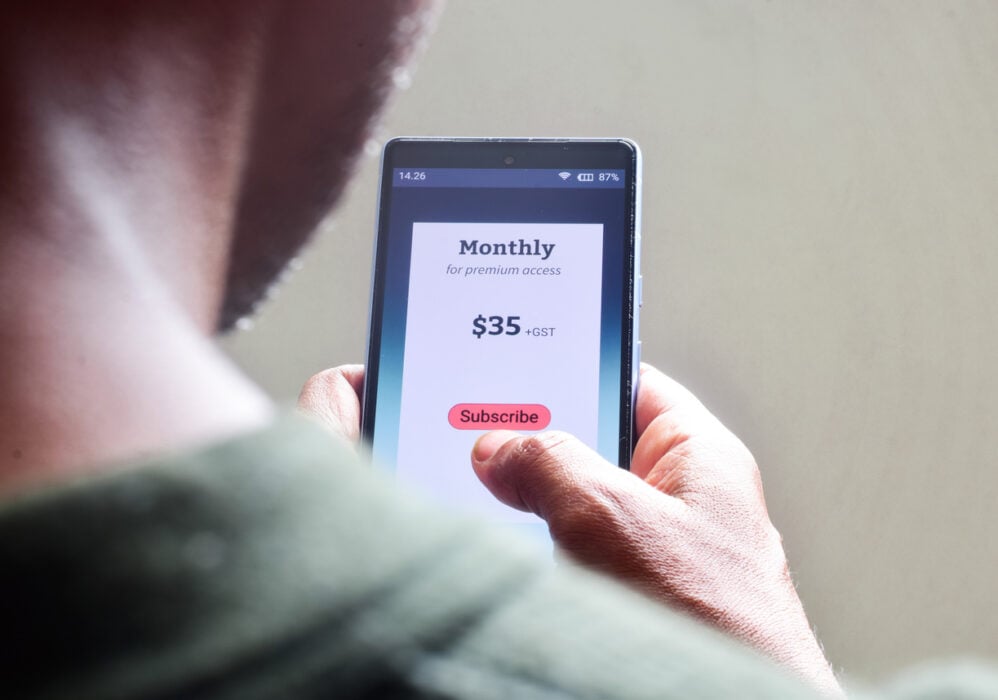
The moment you subscribe, you feel like you’ve taken something off your plate. No more decision fatigue, no more shopping around. But that ease makes it dangerously easy to stop evaluating whether you’re still using what you’re paying for. Services like streaming platforms or subscription boxes become background noise on your bank statement—money quietly exiting your account each month while your habits evolve away from them, according to the experts at Stanford Business.
That’s how people end up paying for five streaming services while rewatching the same old comfort show on just one. We become blind to the money trail because the process is frictionless. Companies know this. They design experiences to keep you enrolled and disengaged from the price. You’re not paying for the product anymore—you’re paying to avoid thinking about it. That’s where the trap lies. Subscriptions turn one-time choices into financial autopilot, and once you’re coasting, it’s easier to lose track than to hit the brakes.
2. Bundled deals trick you into overpaying for things you don’t use.

The logic sounds solid: more services for less money. But bundling often leads to inflated costs because you’re paying for features you don’t even notice, as reported by the authorities at Beyond Cost Plus. You sign up for a deal that gives you music, TV, cloud storage, and same-day delivery—yet you only use two of the benefits consistently. That “great value” is only great if you use it all.
Companies love bundling because it keeps you locked in. Canceling one thing feels like giving up the entire deal. So you stick with it, telling yourself it’s still worth it overall. But deep down, you’re avoiding the math. If you separated the services and paid only for what you use, you might slash your bill in half. The convenience of a bundle often hides the fact that you’re being charged for comfort, not usage.
3. Free trials turn into surprise expenses when you forget to cancel.

There’s nothing wrong with trying something new—but when a trial ends in a surprise charge, it’s no longer a gift. Companies bank on your forgetfulness. They make canceling harder than signing up, and by the time the charge hits, you’re either too busy to fix it or too resigned to bother, as stated by Victor at MyTasker. That one-month test becomes a six-month drain.
Even worse, some people start justifying it after the charge. “Well, I guess I’ll use it now that I paid.” That’s backward logic, and companies rely on that little trick of the mind to keep raking in passive income. The true cost of that “free” trial is time, attention, and delayed action. If you’re not using a calendar reminder or a cancel-today-if-you’re-not-hooked policy, you’re signing up for trouble.
4. Convenience fees eat away at your budget quietly.

There’s the monthly cost—and then there are the “just this once” add-ons. A grocery delivery service that sneaks in a service fee. A fitness app that adds premium content for a few bucks more. Over time, these mini fees accumulate into something much bigger than you expected. They don’t scream. They whisper—right into your wallet.
These quiet charges are rarely questioned because they feel small. But once you stack them across multiple subscriptions, they’re no longer tiny. They’re the reason your budget feels tighter than it should. And because they’re baked into convenience, we don’t want to give them up. That’s the real trap—how they prey on our need for ease, making us pay extra just to keep life moving smoothly.
5. You lose price awareness in everyday purchases.

When everything’s billed automatically, you stop being a price-conscious shopper. You’re no longer comparing what toothpaste costs in-store versus your auto-ship option. You’re not checking if there’s a better phone plan or fitness app. You’re just coasting on whatever you signed up for first.
That loss of price awareness doesn’t feel painful in the moment. But over the course of a year, it can cost you hundreds. You’re not optimizing your spending anymore—you’re just accepting it. Subscription culture makes laziness easy and frugal thinking harder. The longer you let it roll, the more money slips through your fingers without a second thought.
6. Subscription fatigue makes you numb to what you’ve committed to.

Ever scrolled through your subscriptions and been shocked by what you forgot you were paying for? That’s subscription fatigue. When there are too many recurring bills, your brain starts tuning them out. You accept them as part of life, not as decisions that can be undone.
That numbness leads to inertia. You don’t cancel because it feels like a chore. You don’t adjust your plan because it means digging through account settings. Companies know this. That’s why many make it easier to upgrade than to cancel. Once you’re exhausted by managing it all, they win. You don’t even notice the financial burden anymore—just a vague sense that money keeps disappearing.
7. You become dependent on things you used to do yourself.

Meal kits, cleaning services, curated wardrobe boxes—they all start out as exciting upgrades. But over time, they erode skills you used to rely on. You stop meal planning. You stop ironing. You stop researching. It’s not that these services are bad. It’s that they slowly turn you into someone less self-sufficient without you realizing it.
The hidden cost isn’t just financial. It’s the gradual shrinking of your autonomy. The more you rely on subscriptions, the more uncomfortable it feels to operate without them. And that discomfort is what keeps you subscribed, even when you don’t need to be. Convenience becomes a crutch that eventually reshapes your habits—and not always in your favor.
8. Trial stacking trains you to chase novelty instead of value.

There’s always a new app, a hot new tool, or a trending box to try. And when they offer a free trial or a discounted month, it’s hard to resist. So you jump on, use it for a few days, maybe forget about it, and repeat the cycle with the next shiny thing. This hopping habit creates a false sense of productivity or lifestyle upgrade.
But you’re not building anything sustainable. You’re just collecting trials like trophies, leaving a trail of half-used subscriptions and wasted money. It’s not even about the service anymore—it’s about the thrill of the signup. The dopamine hit of “something new.” That’s not financial strategy—it’s distraction disguised as progress. And it’s costing you more than just the fee.
9. You ignore the long-term drain because the short-term feels easy.

Subscriptions are designed to feel harmless. Ten dollars here, five dollars there—it doesn’t feel like you’re doing damage. But add it all up over months and years, and it becomes a major hit to your financial goals. It delays savings. It inflates your lifestyle. It normalizes a constant outflow of money.
And because the charges are spaced out and often hidden behind vague labels, you don’t see the full picture unless you stop and do the math. That’s the most dangerous part. It feels manageable in the moment, so you never bother to look at the big picture. Convenience has a cost—and the longer you avoid facing it, the more it takes.