
How global trade wars are quietly inflating your car insurance.

In the complex ecosystem of your personal finances, your auto insurance premium can often feel like a black box, a number calculated by mysterious forces beyond your control. You might blame your driving record, your zip code, or even your age, but a powerful and often invisible factor is now at play: global trade policy.
The tariffs imposed on imported steel, aluminum, and a host of other automotive parts have created a ripple effect that ends directly in your insurance bill. As the cost to repair vehicles climbs due to these taxes on foreign components, insurers are passing that expense directly on to you. Stopping this overpayment requires a proactive stance against a problem that starts thousands of miles away.
1. You must shop your policy as if it were your job.

The most potent weapon against rising insurance costs is competition. Insurers are notorious for practicing “price optimization,” a strategy where they slowly raise rates on loyal customers who are unlikely to shop around. In an environment where repair costs are already pushing premiums up, staying with one provider without checking the market is a recipe for overpayment.
You need to make shopping for insurance an annual, non-negotiable ritual. Get quotes from at least three to five different companies before your policy renews. Online tools have made this process incredibly efficient. The hours spent could easily save you hundreds, directly counteracting the inflationary pressures caused by parts tariffs.
2. You have to raise your comprehensive and collision deductibles.

Comprehensive and collision are the specific parts of your policy that pay for repairs to your own vehicle. Since tariffs directly increase the cost of these repairs, the premiums for this coverage are where you’re feeling the most pain. The quickest way to lower this cost is by raising your deductibles for this coverage from a low amount, like $250, to $1,000 or even higher.
By agreeing to cover a larger portion of a potential repair bill yourself, you significantly reduce the insurer’s risk, and they will lower your premium in return. Just be sure that you have enough in your emergency fund to comfortably cover the higher deductible should you need to file a claim.
3. A telematics program can prove you are a low-risk driver.

Insurers traditionally rely on broad demographic data to set your rates. A usage-based insurance program, or telematics, allows you to break out of that box. By using a smartphone app or a small device plugged into your car, you allow the insurer to track your actual driving habits, such as braking, speed, and mileage. Good drivers are then rewarded with significant discounts.
This is a powerful way to get a rate based on your individual behavior, not on generalized data that includes the rising cost of repairs for everyone else. If you are a safe, low-mileage driver, a telematics program can provide a discount that helps offset the tariff-driven rate hikes affecting the entire market.
4. Bundling your home and auto policies is a no-brainer.

If your auto insurance and your homeowners or renters insurance are with separate companies, you are almost certainly overpaying. Insurers offer one of their largest discounts, often as high as 25%, to customers who bundle their policies. It’s a simple move that provides an immediate and substantial reduction in your overall insurance costs.
The logic for the insurer is that a customer with multiple policies is more stable and profitable, so they reward that behavior with a steep discount. In a market where external factors like tariffs are pushing base rates up, maximizing every available discount is essential, and the multi-policy discount is usually the biggest one on the table.
5. A defensive driving course is a weekend well spent.

Insurance companies are all about managing risk, and they are willing to reward customers who proactively take steps to become safer drivers. Completing an approved defensive driving course demonstrates your commitment to safety and can earn you a nice discount on your policy, typically for a period of three years.
The few hours and small fee required for the course are often paid back within the first year of insurance savings, making the discount in the following years pure financial gain. Check with your insurer to find out which courses are approved in your state and how much you can expect to save before enrolling.
6. Your credit score is a silent factor in your premium.

It may not seem directly related, but your credit history plays a surprisingly large role in what you pay for car insurance in most states. Insurers have found a statistical correlation between creditworthiness and the likelihood of filing a claim. As a result, a higher credit score can lead to a significantly lower premium, while a poor score can inflate it.
Working to improve your credit score by paying bills on time and keeping your credit card balances low can have a direct, positive impact on your insurance costs. As your score improves, it’s worth asking your insurer to re-evaluate your rate to ensure you’re getting the full benefit of your financial responsibility.
7. You can drop expensive coverage on an older vehicle.

As your car ages, its value plummets. At a certain point, it no longer makes financial sense to pay for full coverage, specifically the collision and comprehensive portions that are most affected by rising repair costs due to tariffs. If your car is paid off and its value is low, you could be paying hundreds a year to protect against a minor potential loss.
A common guideline is to consider dropping this coverage when the annual cost of it exceeds 10% of your car’s replacement value. By switching to liability-only insurance on an older car, you can slash your premium and avoid overpaying to protect a depreciating asset.
8. You should demand a low-mileage discount if you qualify.

The less you drive, the lower your risk of getting into an accident. Insurance companies recognize this and offer discounts to customers who drive less than a certain number of miles per year, often around 7,500 to 10,000 miles. With the rise of remote work, many people now qualify for these discounts without even realizing it.
Check your odometer and provide your insurer with an updated estimate of your annual mileage. If you’ve switched to working from home or have a shorter commute than you did when you first took out the policy, you could be eligible for a reduction in your premium. Don’t pay for miles you aren’t actually driving.
9. There may be hidden affinity group discounts available to you.

Insurers often have partnership agreements with large employers, universities, professional organizations, and even wholesale clubs like Costco. These “affinity group” discounts can be surprisingly substantial, but they are rarely advertised or applied automatically. You have to ask your agent specifically what might be available to you.
Think about all the groups you belong to—your alumni association, your professional union, or any large membership organization. A quick phone call to your insurer to inquire about potential discounts related to these affiliations could uncover savings you were completely unaware of, helping to blunt the impact of rising rates.
10. You can get a discount by paying your premium in full.

Many insurance customers opt to pay their premiums in monthly installments because it feels more manageable. However, insurance companies often charge administrative fees for this service, which are baked into your monthly bill. You can often secure a discount by choosing to pay your entire six-month or annual premium in one lump sum.
If you have the cash available, paying in full eliminates those installment fees and can result in a notable savings over the course of the year. It’s a simple change in payment timing that can directly reduce the total amount you pay for your coverage, and it requires no changes to your actual policy.
11. An anti-theft device can lower your comprehensive costs.
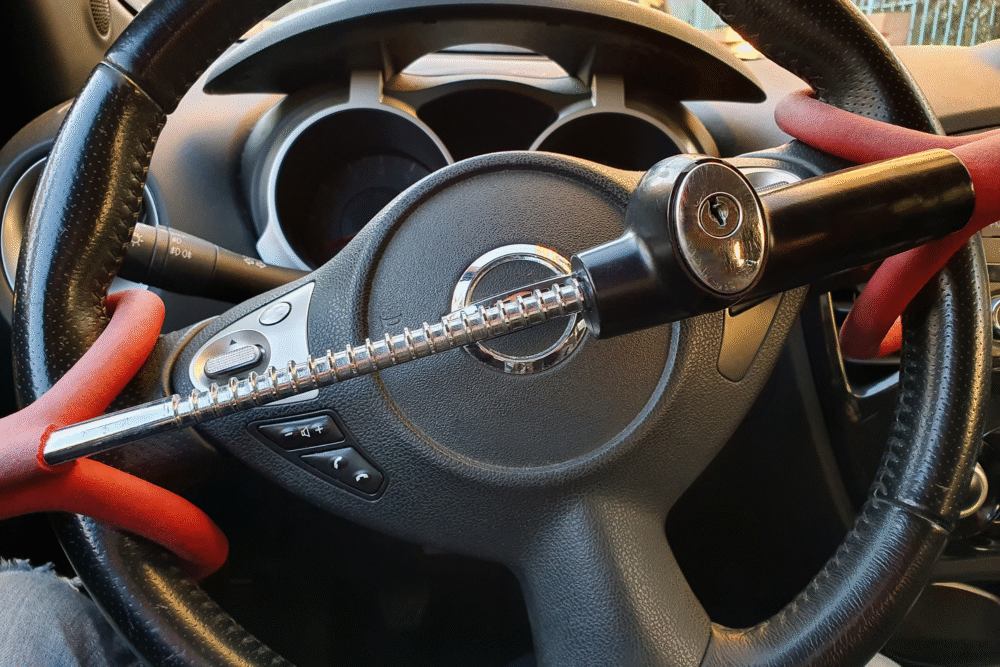
The comprehensive portion of your insurance covers theft, and anything you can do to reduce the risk of your car being stolen can translate into a discount. While most modern cars come with passive immobilizers, adding an audible alarm or a visible anti-theft device like a steering wheel lock can sometimes earn you a small reduction in your premium.
More advanced systems, such as a GPS-based vehicle recovery service, can result in an even larger discount. Check with your insurer to see which devices they recognize and how much you could save. It’s a proactive step that enhances your vehicle’s security while also lowering your insurance bill.
12. You must review your policy details for accuracy each year.

An insurance policy is a detailed document, and small inaccuracies can lead to you overpaying. It’s crucial to conduct an annual review of your policy to ensure all the information is correct. For instance, is the primary driver for each vehicle listed correctly? Is the vehicle being used for business when it’s only for commuting?
Also, check that you aren’t paying for extra services you don’t need, such as rental car reimbursement if you have a second vehicle you could use during a repair. A careful line-by-line review of your policy declarations page can often uncover opportunities to trim costs by correcting outdated or inaccurate information.
13. Your choice of car has a massive impact on insurance costs.

When you are in the market for a new or used vehicle, the cost of insuring it should be a major factor in your decision. Vehicles with high repair costs, particularly those with a lot of expensive imported parts affected by tariffs, will always be more expensive to insure. Sports cars and large luxury SUVs also command high premiums due to their speed and complexity.
Before you buy a car, get insurance quotes for several different models you are considering. You might find that a more modest, domestic sedan is dramatically cheaper to insure than a foreign luxury model, a difference that can save you thousands of dollars over the years you own the vehicle.