
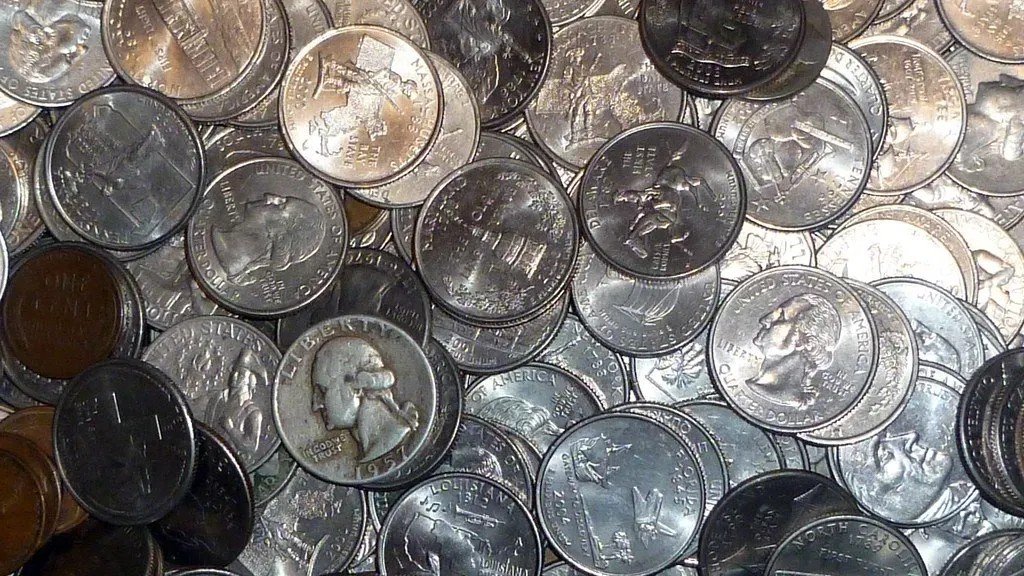
There is something deeply human about the urge to hold history in your hands. A small metal disc, worn smooth or pristine and untouched, can carry the weight of an entire era. Coin collecting, or numismatics as it is formally known, has grown from a quiet pastime into a serious global market. The global coin collection market was valued at approximately $20.9 billion in 2024, and the appetite for rare, historically significant pieces shows no sign of cooling.
The coin collection market is experiencing a resurgence as collectors and investors increasingly seek tangible assets that offer both aesthetic and financial value. What was once considered a grandfather’s hobby is now a sophisticated investment strategy. A report from Blanchard showed that coins in MS65 grade had an average annual return of 11.0% between 1979 and 2016, outperforming gold, treasury bonds, and many other asset classes.
Six Coins That Right Now

The coins featured below are not just rare. They are legends of the numismatic world, each carrying a story so compelling that serious collectors will do almost anything to own one. Some are the result of historical accidents, government orders, and even theft. Others represent the highest artistic achievement in the history of American coinage.
Most of these valuable coins have real, movie-like but true stories, from chance discoveries in collections or wooden boxes in a library, to thefts, Secret Service intervention, World War II, and more. Understanding what makes each one extraordinary is the first step to appreciating just how much collectors are willing to spend. The six coins below represent the pinnacle of what the numismatic market has to offer right now.
1. The 1933 Saint-Gaudens Double Eagle: The Forbidden Coin

The 1933 Double Eagle is a United States $20 gold coin. Although 445,500 specimens were minted in 1933 in the midst of the Great Depression, none were officially circulated, and all but two were ordered to be melted down. The story behind this coin reads like a heist novel, complete with government seizures, diplomatic intrigue, and a decades-long legal battle. Twenty more are known to have been rescued from melting by being stolen, finding their way into the hands of collectors before later being recovered. Nine of those recovered coins were destroyed, making this one of the world’s rarest coins, with only 13 known specimens remaining, of which only one is privately owned.
The 1933 Double Eagle is among the most valuable of U.S. coins, with the sole example currently known to be in private hands selling in June 2021 for US$18.9 million. Because the coin was never released to the public, it is illegal to privately own any of the 1933 Double Eagles, with the exception of that single Weitzman Specimen. The design itself is breathtaking. The obverse of the coin features a captivating depiction of Lady Liberty striding confidently forward, holding a torch and an olive branch, while the reverse showcases a majestic eagle soaring above a radiant sun.
2. The 1913 Liberty Head Nickel: The Unauthorized Legend

The 1913 Liberty Head Nickel is one of the most valuable rare coins globally. Only five examples exist, making it a highly coveted item for any coin collector. Despite not being officially authorized, these nickels were clandestinely minted, contributing to their unique status and immense value. The mystery surrounding who authorized their production and why has only deepened collector desire over the decades. These coins showcase the design by Charles E. Barber, who famously minted the Liberty Head Nickel from 1883 to 1912. Their unexpected appearance in 1913 added intrigue and historical importance, increasing their appeal to collectors.
The 1913 Liberty Head Nickel fetched $5 million at auction. Its rarity and the intriguing story behind its limited mintage make it a coveted item among collectors. These coins don’t officially appear in the records of the U.S. Mint, further elevating their mystique and desirability. As rare coins often maintain or increase in value due to their scarcity and historical connections, further value appreciation for the 1913 Liberty Head Nickel is expected, driven by enduring collector interest and the coin’s storied past.
3. The 1794 Flowing Hair Silver Dollar: The Nation’s First Dollar

The Flowing Hair dollar was America’s first official silver dollar, with the first released in 1794. The coin was engraved by Robert Scot and features a visage of Miss Liberty with flowing hair on the obverse. The reverse showcases an eagle perched on a wreath. There is a reason collectors treat this coin with near-reverence. Dating back to the earliest days of the U.S. Mint, the 1794 Flowing Hair Silver Dollar symbolizes the birth of the dollar as an American currency. Its production run was incredibly short, yielding a mere 1,758 coins, making authentic examples rare and highly desirable.
The 1794 Flowing Hair Silver Dollar may sit atop the rankings of the most expensive coins ever sold. Some experts believe it was the first silver dollar struck by the U.S. Mint. The front features a profile of Lady Liberty with flowing hair, while the reverse shows an American eagle. Fewer than 1,800 of these coins were ever produced, and one expert puts the number of remaining coins at between 120 and 130. The coin sold at auction for $12 million in 2022. For a coin that once traded for face value, that is a remarkable trajectory.
4. The 1787 Brasher Doubloon: America’s First Gold Coin

The Brasher Doubloon, minted in 1787, holds the distinction of being the first gold coin produced for the United States. Its historical importance and scarcity have led to significant valuations, with one example fetching $9.36 million at auction. The 1787 Brasher Doubloon bridges the gap between unofficial currency and collector’s gem. Ephraim Brasher, a goldsmith and silversmith, produced these coins out of his own ambition, despite New York State’s rejection of his proposal for coinage. Brasher’s determination saw him minting coins in both bronze and gold, and it is the gold specimens that have intrigued collectors for generations.
Due to the extreme rarity of the 1787 Brasher Doubloon, with only seven original pieces known, and given its high value, there are numerous forgeries of the coin. Authentication by a recognized grading service is absolutely essential before any purchase. Sold by Heritage Auctions on January 21, 2021, one 1787 Brasher Doubloon fetched $9.36 million, graded MS-65 with CAC approval, making it one of the finest known examples in existence.
5. The 1804 Silver Dollar: The “King of American Coins”

Among the royalty of U.S. coins, the 1804 Silver Dollar, particularly the Class I variety, holds a revered spot. Commonly referred to as the “King of U.S. Coins,” it has a mystique that is as significant as its monetary value. Although they bear the date 1804, these striking silver pieces were not minted until 30 years later in 1834 as diplomatic gifts for Asian monarchs during trade missions. The gap between the date on the coin and the actual year of minting is one of the great quirks of American numismatic history. In all, only 15 known examples of 1804 dollars exist and are now seven-figure rare coins.
The 1804 silver dollar sold for $7.68 million on August 18, 2021, through Stack’s Bowers. It is graded PR-68 and has a perfect proof finish. Though dated 1804, it was actually struck in the 1830s as a diplomatic gift. Only a handful of Class I specimens exist. One such coin once belonged to the Sultan of Muscat and later passed through the hands of prominent collectors. The layers of provenance that these coins carry only amplify their collector appeal and push their values higher with each generation.
6. The 1893-S Morgan Silver Dollar: The Holy Grail of the Morgan Series

Morgan Silver Dollars, minted between 1878 and 1904 and briefly in 1921, stand as iconic pieces in any coin collector’s trove. Designed by George T. Morgan, their allure lies in both historical and economic significance. Key specimens like the 1893-S Morgan Dollar and the 1889-CC Morgan Dollar underscore their place among the rarest coins. Of all the Morgan dates, the 1893-S is the one that makes seasoned collectors go quiet with longing. The 1893-S, with a mintage of only 100,000, reaches values over $1 million, with the finest examples fetching over $2 million.
Notable examples include the 1894-S Barber Dime with only 24 minted, making it one of the rarest coins in U.S. history. Similarly, the 1893-S Morgan Dollar is considered a key date in the Morgan series, with only 100,000 coins produced, further enhancing its desirability among collectors. Investing in Morgan Silver Dollars is compelling due to their scarcity and rising demand. Rarity drives value, but continuous interest among collectors enhances future worth. As a result, values for these rare coins are projected to increase further.
A Market That Is Only Going to Grow

The numbers behind the rare coin market tell their own compelling story. Twenty-eight of the top 30 highest auction prices realized for coins sold at auction during the course of 2024 were achieved with coins graded by Professional Coin Grading Service, continuing a longtime trend of the rarest and most valuable coins being authenticated and encapsulated by expert graders. In 2024, Stack’s Bowers achieved a historic $275.6 million in auction sales, while gold, silver, and platinum surged to new highs, signaling a dynamic year for collectible and bullion-impacted coins alike.
The Coin Collecting Market is projected to grow at 8.08% CAGR from 2024 to 2035, driven by increasing digital platforms, rising collector demographics, and enhanced investment interest. The error collection segment is projected to be the fastest-growing at a CAGR of 20.9% from 2025 to 2032, as rare minting mistakes significantly increase the rarity and value of coins in secondary markets. Whether you are a seasoned numismatist or a curious newcomer, the message from the market is clear: these coins are not just spending money. They are history, art, and investment all forged into a single, irreplaceable disc of metal.