
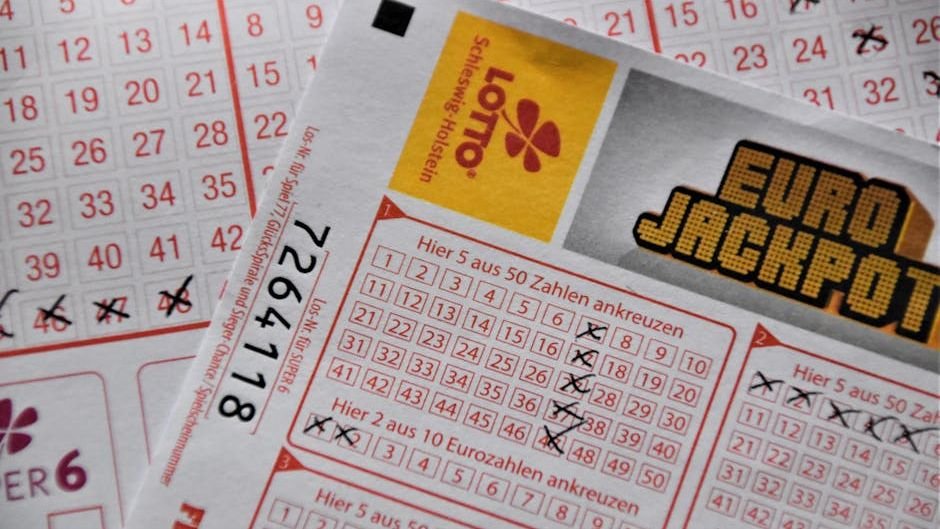
Most people have imagined it at least once. You check the numbers, your heart goes absolutely haywire, and suddenly the world you knew looks completely different. But what happens next is where the story gets really interesting – especially if you decide to keep quiet about it.
Winning the lottery is one of those rare life events that carries equal parts freedom and fear. The freedom is obvious. The fear? That’s where most people underestimate the game. What if the single most powerful choice you could make after a jackpot win wasn’t about where to invest – but about who not to tell? Let’s dive in.
1. Financial Stress Didn’t Just Shrink – It Nearly Vanished

Here’s the thing about financial stress: it doesn’t just hurt your wallet, it physically wears you down. Financial stress can have an outsized impact on mental health. That daily background hum of anxiety – the mortgage, the car payment, the “what if” spiral at 2 a.m. – quietly disappears when the pressure is gone.
What’s fascinating is that researchers have actually quantified this relief. Positive income shocks have no significant effect on self-assessed overall health, but a significant positive effect on mental health. In other words, it’s not your body that transforms – it’s your mind, quietly unclenching for the first time in years.
There is also some evidence that lottery prizes affect the ability to concentrate, sleep quality, and the absence of pressure. Better sleep. Clearer thinking. Less noise. Honestly, that alone might be worth more than the jackpot itself.
2. Life Satisfaction Went Up – and Stayed Up

We often confuse happiness with life satisfaction, but they are genuinely different things. Day-to-day joy is one thing. The deeper sense that your life is actually going well – that is something else entirely. Overall, the money led to positive long-term satisfaction, and large-prize winners experience sustained increases in overall life satisfaction that persist for over a decade and show no evidence of dissipating with time.
This is not a short-term dopamine spike. Relative to matched controls, large-prize winners experience sustained increases in overall life satisfaction that persist for over a decade and show no evidence of dissipating over time. That is a decade-plus of measurably better life evaluation – backed by one of the largest studies ever conducted on lottery winners, published in the Review of Economic Studies.
Follow-up analyses of domain-specific aspects of life satisfaction implicate financial life satisfaction as an important mediator for the long-run increase in overall life satisfaction. When you’re no longer worried about money, the ripple effect touches nearly every other corner of your existence.
3. Work Became a Choice, Not a Cage

One of the most liberating realizations after a secret win? You go to work the next Monday – and for the first time, you actually choose to be there. Research on lottery winners consistently shows that most winners don’t quit outright. In one study of Swedish lottery winners, less than 12% quit working, approximately 24% took unpaid full-time leave, 16% reduced their working hours, but 62% did not make any of these changes.
Instead, what changes is the internal relationship with work. Domain-specific analyses provide some evidence that winners are more satisfied with their spare time, and prior evidence that winners modestly reduce their labour supply over a very long horizon suggests that more, or higher-quality, leisure time contributes to the rise in overall life satisfaction.
Lottery prizes lead to a reduction of working hours but not to a decrease in the employment rate. The shift is subtle but profound – fewer hours, less grind, more presence. Think of it less as quitting the race and more like finally being allowed to run at your own pace.
4. The Temptation to Overspend Simply Didn’t Win

There is a persistent myth that lottery winners blow everything in a wild spending frenzy. Popular culture loves that story. Science, however, tells a different one. One study of American lottery winners concluded matter-of-factly that “contrary to popular beliefs, winners did not engage in lavish spending sprees.”
Keeping the win secret actually reinforces this discipline. When nobody around you knows, there’s no social pressure to perform wealth – no luxury car to prove a point, no exotic vacation to Instagram. One documented case involved a winner who used his winnings to make wise investments, quietly growing his fortune without attracting any attention.
Large-prize winners spend down their windfalls, but lottery wealth dissipates slowly and is robustly detectable for well over a decade after the win. That’s the quiet truth about real wealth management. It grows slowly, invisibly, and deliberately – and secrecy is one of the most underrated tools for achieving it.
5. Privacy Became the Ultimate Luxury

If you’ve ever wondered what true peace of mind feels like – try being wealthy and unknown at the same time. Across the country, lawmakers are advancing legislation to protect lottery winners’ privacy and safety by preserving anonymity, following concerns over harassment, fraud, and even violent crimes targeting lottery winners after their identities became public.
The legal landscape around lottery anonymity is actively evolving. States including Kentucky, Maine, Massachusetts, New York, New Hampshire, Pennsylvania, and Virginia have introduced or passed measures in 2025 to allow some winners to remain anonymous or limit how their information can be disclosed. The trend is unmistakable – privacy is now recognized as a legitimate safety issue, not just a personal preference.
Establishing a trust is considered the best way to claim lottery winnings, as it helps safeguard both privacy and assets, and claiming through a trust can keep a winner’s identity private, even in states that typically require winners to be publicly identified. Anonymity, it turns out, is not just comfortable – it’s smart strategy.
6. Relationships Got Cleaner and More Honest

Let’s be real. Money changes people – or more accurately, money reveals them. When you don’t announce a windfall, the people in your life continue to treat you exactly as they always have. No sudden “best friends” crawling out of nowhere. No cousins with urgent investment opportunities.
Keeping the win secret allowed one documented winner to make careful and wise financial decisions, and he wasn’t feeling the pressure that can typically come with winning a large lottery prize. The absence of external noise created the mental space to think clearly – and to truly see who people were without the lens of money distorting everything.
I think this is one of the most undervalued benefits of the secret-win approach. Your relationships stay rooted in reality. There’s a certain quiet joy in knowing that a friend calls you on a Tuesday not because they want something – but because they actually like you.
7. Smart Financial Decisions Followed Almost Naturally

When you don’t feel the rush of public expectation, financial decision-making slows down in the best possible way. Before identifying yourself, financial experts advise assembling a team consisting of a financial planner, an accountant, and a lawyer, with the lawyer being the first call. That kind of deliberate approach is far easier when no one is watching you.
Winners also invest a substantial share of the wealth in financial assets, often opting for low-risk bond products over equities. Boring? Maybe. Effective? Absolutely. It turns out that the less exciting the financial move, the more durable the result tends to be over time.
Using a trust and investing wisely or placing funds in an annuity can also help prevent winners from overspending very quickly. Structure, patience, and professional guidance – these are the actual tools of lasting financial transformation, not lucky numbers.
8. Mental Health Quietly Improved Over Time

Here’s where the data gets genuinely interesting – and a little counterintuitive. Winning didn’t immediately create euphoria. The change was gradual, almost imperceptible at first. Two years after a lottery win, the average measured improvement in mental wellbeing is 1.4 GHQ points – a statistically meaningful shift according to research using the General Health Questionnaire, an internationally recognized measure of psychological strain.
It could take some time for big lottery winners to start enjoying their windfalls. This slow-burn effect is actually a feature, not a bug. It gives the brain time to adjust rather than spiral – which is part of why keeping the news quiet is so psychologically protective in those early months.
Positive income shocks have a significant positive effect on mental health. Research from the British Household Panel Survey confirms what many secret winners seem to intuitively understand: the benefit builds quietly, and it’s real. The key is not disrupting the process with chaos.
9. Freedom of Time Replaced the Pressure of Scarcity

Time scarcity is the silent thief of modern life. Most people don’t even realize how much of their mental bandwidth is consumed by the logistics of not having enough – money, time, options. When financial pressure lifts, time itself feels different. Evidence suggests that more, or higher-quality, leisure time contributes to the rise in overall life satisfaction among lottery winners.
Winning the lottery led individuals to reduce their labor supply immediately after winning, and winners maintained lower earnings for at least ten years. That is a decade-long shift in how time gets allocated – a slow, sustained migration away from obligation and toward chosen activity. It’s the difference between reading a book because you have to and reading one because you want to.
Some prize winners reduced their working hours, but on average less than 10 hours per week. Even that modest reduction – the equivalent of just two freed-up mornings – can fundamentally change how a week feels. Small reclamations of time have outsized effects on overall wellbeing.
10. Long-Term Life Satisfaction Outlasted Every Expectation

Perhaps the most powerful finding across all the research on lottery winners is the one that defies the most popular assumption. People expect the excitement to fade fast. Evidence shows no indication that the effect varies by years-since-win, suggesting a limited role for hedonic adaptation over the time horizon analyzed. In plain terms: winners don’t simply “get used to it” and revert to baseline.
Lottery winners who won larger sums of up to $2 million actually retained their wealth well over a decade after the jackpot. This consistency – both financial and psychological – is striking. It runs directly counter to the doom-and-gloom narratives that get endlessly recycled in the media every time a big jackpot rolls around.
Where winning did make a difference was life satisfaction – researchers measured this by asking things like how happy are you with your finances, and that’s where the strongest effects of lottery wealth appeared. Financial satisfaction, it turns out, acts as a stabilizing anchor for overall life quality. Not flashy, not dramatic – but quietly, persistently transformative. And maybe that’s exactly the point.
Conclusion: The Quiet Jackpot No One Talks About

The most interesting lottery story is rarely the one on the news. It isn’t the winner who bought three houses in a week or the one who ended up bankrupt four years later. It’s the person who said nothing, took their time, hired good advisors, and slowly built a life that looked almost ordinary from the outside – but felt completely free on the inside.
The research is consistent: improved financial circumstances is an important mechanism behind the increase in life satisfaction. Not fame, not status, not the spectacle of sudden wealth – just the quiet, structural removal of financial pressure. That’s the real prize, and it turns out secrecy might be what protects it best.
So here’s something worth sitting with: if you found out tomorrow that a neighbor had won a life-changing sum years ago and told no one – would you think they were foolish, or quietly brilliant? What would you have done?