
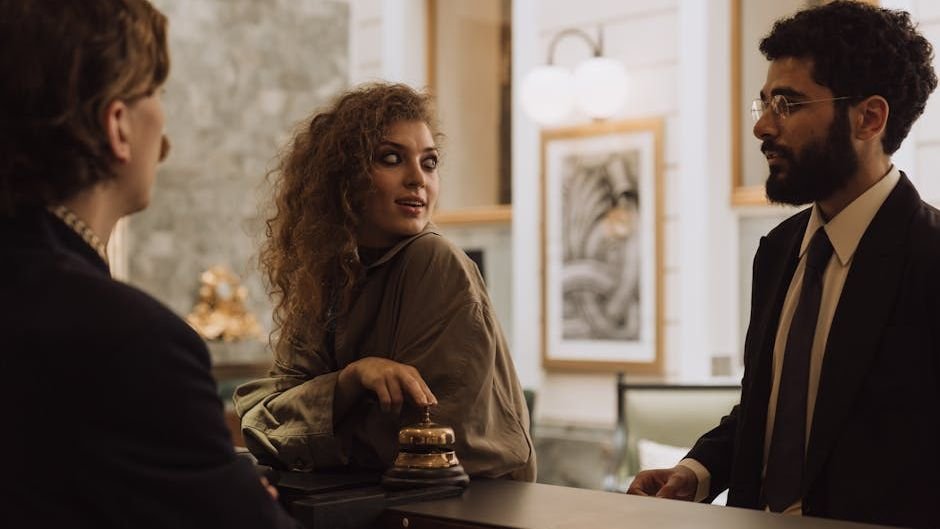
There’s a particular kind of guest that every luxury hotel manager quietly learns to recognize within the first thirty seconds of a check-in. No fanfare, no entourage making noise in the lobby, no designer logos screaming for attention. They walk in like they own the place, except the fascinating part is they never actually act like they do. Old money guests are a different species altogether in the hospitality world, and after years managing some of the finest properties across the country, I can tell you the differences are not subtle. They are unmistakable.
Those in the hospitality industry broadly agree that manners, despite a few exceptions, are typically indicators of social class. As one senior hotel manager at the Gstaad Palace has noted, old money guests tend to be very quiet, very discreet, and appear truly elegant throughout their stay. The contrast with newer wealth is striking, and nowhere is it more visible than during those first few minutes at the front desk. So let’s dive in and explore exactly what separates old money guests from everyone else the moment they arrive.
1. They Never Announce Their Wealth at the Desk

Walk into any five-star lobby on a busy Friday evening and you’ll spot the difference almost instantly. Some guests make sure the front desk knows exactly how much they spent on the suite. Old money guests? They say nothing of the sort.
Discretion stands as the cornerstone of authentic old money etiquette in every social interaction. Those with generational wealth understand that true sophistication never draws attention to itself. It’s a rule they seem to have absorbed through years of upbringing rather than something they consciously apply in the moment.
Old money is not just about a bank balance brimming with zeros. It’s about an attitude, a set of behaviors, a way of life that stands apart from today’s ostentatious, selfie-obsessed culture that constantly flaunts wealth for attention. Honestly, it’s refreshing. No performance, no positioning. Just quiet presence.
2. They Never Make a Scene If Something Goes Wrong

Here’s the thing about guests who’ve stayed in the world’s finest hotels for decades: they rarely make a public scene. If a reservation detail is wrong or a room isn’t ready, they’ll mention it calmly, almost conversationally. The lobby doesn’t turn into a theater.
Old money guests have the good grace to hold their tongue when frustrated, finding the right words at the right moment. It’s not just about knowing the social niceties, it’s about showing respect and dignity in every interaction. That composure is something you genuinely cannot fake under pressure.
Restraint manifests in spending habits, emotional expression, and even verbal communication. Old money families teach their children to speak deliberately and thoughtfully rather than impulsively. You can feel it the moment a situation arises. There’s no raised voice, no dramatic sigh for the whole lobby to hear.
3. They Never Name-Drop Celebrities or Other Hotels

I’ve lost count of how many guests mention the Ritz, a Hollywood star they once bumped into, or a private island they recently visited, all within the first two minutes of check-in. It’s a kind of social currency that newly wealthy travelers often spend freely. Old money guests virtually never do this.
Old money etiquette involves remembering details about others and connecting people to help them, not to elevate yourself. Gossip, complaints, or negative talk about others are things to avoid. Staying positive and discreet is the standard. Name-dropping belongs in neither category.
Unlike new wealth, which might embrace conspicuous consumption, old money embraces understatement. Families with generational wealth developed these social rules to distinguish themselves from those who recently acquired fortune. The irony is that by saying less, they somehow communicate far more about who they are.
4. They Never Stare at Their Phone During the Check-In Interaction

This one surprises a lot of people. You’d think high-net-worth travelers might be even more tethered to their devices, fielding investment calls and board messages. Old money guests are consistently the ones who put the phone away entirely when speaking to staff.
Keeping your phone away during conversations is a hallmark behavior. Writing actual thank-you notes on quality paper, with specific personal details rather than generic messages, is another expression of the same attentive respect. The phone disappears because the person in front of them matters more.
Old money manners go beyond the basics to show consideration, restraint, and confidence. Keeping the phone away during conversations and arriving on time are two of the clearest signals of this deeply embedded social code. In a world glued to screens, this simple act lands like a quiet thunderclap of class.
5. They Never Overdress to Impress the Lobby

You’d think the wealthiest guests would be dripping in labels and statement pieces when they walk through the door. Almost always, the opposite is true. Old money guests tend to arrive looking effortlessly pulled together without trying to signal anything through what they’re wearing.
Real old money people dress well but quietly. They drive nice but not flashy cars. The women only bring out their finest jewels on formal or special occasions. It’s a philosophy that extends straight through to check-in. Nothing is performed, nothing is for the audience.
True old money behavior displays quiet confidence through understated elegance rather than flashy status symbols. Old money behavior shows quiet confidence and status without flashy displays. Think of it like a beautifully made watch worn under a shirt cuff. The quality is there, you just don’t shout about it.
6. They Never Ignore or Talk Down to Staff

This is actually one of the clearest signals to any experienced hotel manager. Some guests treat front desk staff the way they’d treat furniture. Old money guests almost uniformly treat hotel employees with directness, courtesy, and genuine respect.
At the Gstaad Palace, a standard expectation is that all guests treat every colleague nicely. Those who cannot follow this guideline, regardless of how much money they might have, simply do not belong in that environment. That message resonates because it’s backed by long-standing observation.
Staff at luxury properties work hard to deliver an exceptional experience, and showing respect back creates a genuinely warm atmosphere. When guests are polite and kind, they often find that people go the extra mile for them, sometimes offering small extras or treating them like a VIP. Old money guests seem to understand this intuitively, possibly because they’ve lived it for generations.
7. They Never Demand Special Treatment Loudly

There’s a crucial difference between expecting exceptional service and demanding it at full volume in a crowded lobby. Old money guests know exactly which side of that line to stay on. Their preferences and expectations are communicated quietly, often before arrival, never as a public spectacle.
With the rise of intelligent hospitality technology, affluent guests increasingly expect a high level of personalization during their stay. This includes tailored recommendations, dining options based on their preferences, and room settings adjusted to their liking before they even arrive. The key difference is that old money guests arrange this beforehand, not loudly at the desk upon arrival.
Guests at luxury hotels often harbor elevated expectations concerning both service and etiquette, meaning that subtle engagement caters to these implicit norms without anyone needing to be prescriptive about it. Old money guests rarely need to raise their voice because the best properties already anticipate their needs. And if they don’t, a quiet word to the manager is all it takes.
8. They Never Post About It on Social Media in the Lobby

The moment some guests step into a stunning lobby, out comes the phone for a reel, a story, or a check-in post. Old money guests genuinely don’t engage with this behavior, particularly during the check-in interaction itself. It’s not that they’re technophobes. It’s that their privacy means more to them than the engagement.
Those with generational wealth typically maintain a minimal social media presence, strongly preferring privacy. Sharing personal photographs, travel experiences, or home interiors online violates the discretion principles that define this group. It’s almost like a cultural rule that never had to be written down because it was simply understood.
As affluence expands across generations, the traditional codes of luxury travel are being challenged. The 2024 report by WATG Research examines these shifts in consumer behavior and demographic transitions. Newer affluent travelers increasingly seek value in meaningful experiences, emotional connections, and environmental responsibility rather than public display. Old money still keeps the curtains drawn.
9. They Never Rush or Create a Sense of Urgency

Old money guests never give the impression of being in a hurry during check-in. They move at a steady, comfortable pace, ask measured questions, and never rush the process. There’s an almost architectural calm about how they carry themselves in that moment.
It’s hard to say for sure where this comes from, but I think it’s rooted in a deep sense of security. When you’ve never had to fight for a seat at the table, you don’t enter the room sprinting. Old money guests value discretion, education, good manners, and long-term thinking above all else. That long-term orientation extends to something as small as patiently standing at a front desk.
The sense of belonging to an exclusive community, cultivated by refined environments, naturally fosters a greater likelihood of guests adhering to established etiquette norms. The rising tide of mindful travel also plays a part, with individuals becoming increasingly attentive to their own behavior and drawn to settings that encourage a respectful approach. Old money guests were living this before “mindful travel” became a buzzword.
10. They Never Ask About the Price of the Room at the Desk

Let’s be real. There’s a recognizable kind of guest who has booked an expensive suite and still wants to recite the price back to the staff, almost as proof of status. Old money guests almost never do this. The transaction is settled before they arrive. It’s simply not a topic.
Today’s luxury traveler is younger, tech-savvy, and experience-driven. To better cater to this segment, understanding who they are and how they behave is important. Interestingly, it’s the newer wave of wealthy guests who are most likely to reference what they paid. Generational wealth brings a different relationship with money entirely.
Millennials and Gen Z are rapidly replacing Baby Boomers as the dominant luxury travel segment, expected to account for the vast majority of all luxury purchases by 2030. They value authenticity, sustainability, and personalization over traditional symbols of status. Old money guests were already living this philosophy long before it became a trend report talking point.
11. They Never Arrive Without Doing Their Research First

Old money guests almost always know the hotel before they arrive. They’ve often stayed before, sometimes for decades. If it’s a first visit, they’ve done their homework quietly and arrive knowing exactly what they want, with no need to ask basic orientation questions at the front desk.
Elevated demand for bespoke journeys, immersive cultural encounters, and exceptional quality of service underscores a global appetite for exploration at its most refined. The best luxury travelers arrive with a clear sense of what authenticity and the timeless art of travel means to them. Old money guests embody this. They’re never winging it.
Modern luxury travelers prefer authentic, unique, and enriching experiences, and luxury hotels are transforming to offer personalized service, curated local experiences, and bespoke activities. Old money guests know how to find all of this without relying on the check-in counter as their information desk. The concierge gets that call later, privately.
12. They Never Forget to Acknowledge the Person in Front of Them

This might be the most quietly powerful item on the entire list. Old money guests consistently acknowledge the person checking them in as a human being, not simply a function. They ask a name, they make brief, genuine small talk, they say thank you and mean it.
Making others feel important and included is a hallmark of true sophistication, and it earns genuine respect from those around you. That five-second moment of human recognition from a guest leaves an impression that can last an entire stay.
Anyone, regardless of their bank balance, can adopt good manners and etiquette as part of their character. Good manners are a reflection of personal respect and sound upbringing, not wealth. Old money guests aren’t polite because they’ve been told to be. They’re polite because it’s genuinely who they are. And after all these years in this industry, that difference is crystal clear the second someone walks through the door.
What It All Adds Up To

Working in luxury hospitality for years teaches you something that no training manual ever could. Real elegance isn’t a price tag, a brand name, or a reservation confirmation number. It’s a way of moving through the world that communicates respect, security, and genuine presence all at once.
The luxury hotel market was valued at $113.1 billion in 2024 and is estimated to reach $181.5 billion by 2034. As this market grows and welcomes newer generations of affluent travelers, the gap between learned behavior and inherited culture becomes even more visible at the front desk every single day.
Old money guests remind every hotel manager of what the best version of this industry looks like: thoughtful, discreet, genuinely warm, and never performing for an audience. The lobby isn’t a stage. The check-in is not a premiere. It’s simply the beginning of a stay. And the guests who understand that most deeply are always, always the ones who say the least. What do you think – did any of these surprise you? Drop your thoughts in the comments below.