What Exactly Is FIRE?
There’s a particular kind of daydream that shows up during a rough Tuesday at work: if you could just… stop? Not retire at 65 like your parents did, but walk away decades earlier, on your own terms, with the bills already handled. That daydream has a name, an entire online subculture, and …


Where the idea actually started

The concept did not spring up on TikTok or Reddit, even though those platforms helped it go viral. The main ideas behind the FIRE movement originate from the 1992 best-selling book Your Money or Your Life written by Vicki Robin and Joe Dominguez, as well as the 2010 book Early Retirement Extreme. These works laid out a basic template for simple living paired with investment income.
The modern movement got its real momentum online. The Mr. Money Mustache blog, started by Peter Adeney in 2011, generated interest in achieving early retirement through frugality and helped popularize the FIRE movement. From there, the movement gained traction among millennials in the 2010s, spreading through blogs, podcasts, and online communities.
The core idea, stripped down

At its simplest, the Financial Independence, Retire Early movement is characterized by high savings rates, often exceeding the 10 to 15 percent typically recommended by financial planners, paired with aggressive investment, with the goal of accumulating sufficient assets to cover living expenses without traditional employment. It is less a single strategy than a mindset, a decision to treat time as the scarce resource rather than money.
Financial independence means, in the most basic sense, that you are no longer financially dependent on an employer, and this appeals to those who value their time at least as much as they value an increasing investment portfolio. That distinction matters, because financial independence and actually quitting your job are not the same thing.
The math behind the acronym

FIRE runs on two linked formulas that show up in nearly every conversation about it. The most frequently cited savings target is based on the 4% rule, introduced by financial planner William Bengen in 1994, which suggests that a retirement portfolio equal to 25 times annual expenses can sustain long-term withdrawals.
In plain terms, someone spending sixty thousand dollars a year would aim to accumulate roughly one and a half million dollars invested. According to the 4% rule, by withdrawing roughly 4% or less per year from your savings, adjusted for inflation, you can raise the probability that your savings may last several decades. It is a rule of thumb rather than a guarantee, and it was built on decades of historical market data rather than any promise about the future.
Why the savings rate does the heavy lifting

Traditional retirement advice suggests putting aside a modest slice of each paycheck. FIRE flips that ratio dramatically. Most personal finance advice recommends saving 10 to 15 percent of your income toward retirement, but the most committed FIRE adherents aim for 60 to 70 percent.
That kind of saving rate compresses the timeline in a way that regular retirement planning simply cannot match. At a 75% savings rate, ignoring investment growth, it would take fewer than 10 years to accumulate 25 times annual living expenses. Of course, real life rarely ignores investment growth, taxes, or inflation, which is exactly why the movement leans so heavily on investing rather than just hoarding cash.
Lean FIRE: doing more with less

Not everyone pursuing financial independence wants the same lifestyle on the other side of it. LeanFIRE emphasizes achieving financial independence by maintaining very low living expenses, allowing a smaller investment portfolio to be sufficient. Followers of this path tend to prize simplicity over comfort spending.
The numbers involved are notably modest. Those who follow the Lean FIRE approach plan on spending less in retirement and focus on a minimalist lifestyle and strict budgeting, usually living on $25,000 or less yearly and prioritizing needs over wants. It is FIRE at its most disciplined, and honestly, its most demanding version.
Fat FIRE: independence without the belt tightening
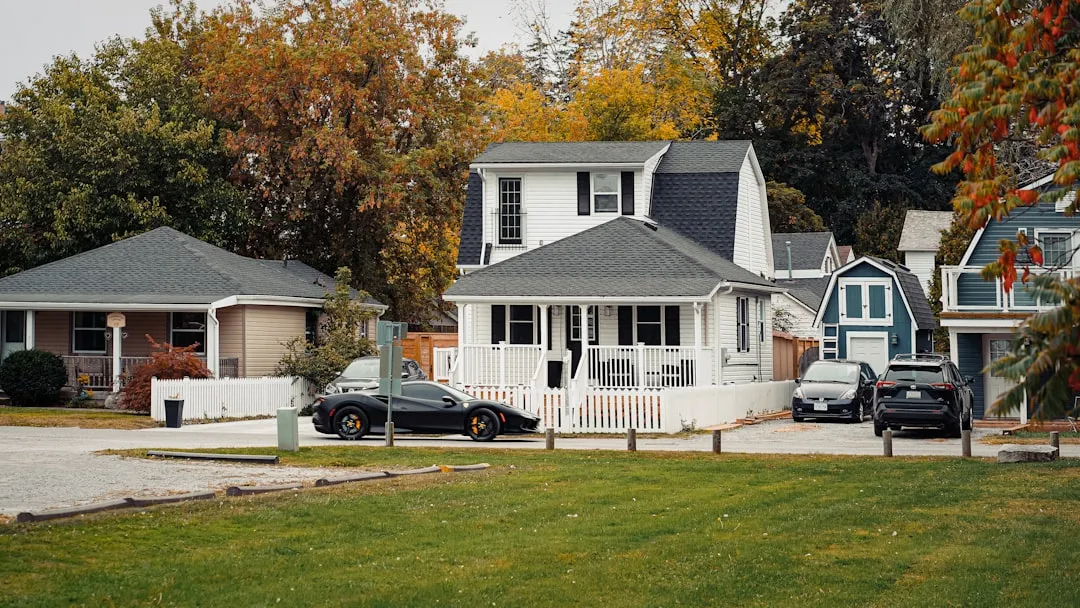
On the opposite end sits a version built for people who never wanted to give anything up. FatFIRE refers to pursuing early retirement while maintaining or exceeding a middle-class standard of living, requiring a larger savings target than LeanFIRE.
The trade off is obvious once you look at the numbers. Fat FIRE is for people who want to maintain a higher lifestyle in retirement, and supporting a $200,000 a year lifestyle, for example, requires far more saved than living on $50,000. This path usually demands either a very high income, a very long runway, or both.
Coast FIRE: front loading the hard part

Some people do not want to grind through decades of extreme frugality, and Coast FIRE offers a middle path. This approach focuses on saving and investing aggressively early in your career until your balance reaches a point where it can compound to your FIRE number on its own, freeing up your income for current spending or other priorities.
Once that threshold is hit, the pressure eases considerably. Coast FIRE is about saving aggressively during the early career years, typically in a person’s twenties and thirties, reaching a point where they no longer need to invest further to hit their target number by traditional retirement age, after which they can pull back and let compounded growth do the heavy lifting. It rewards people who front load the sacrifice while they are young and still have decades for compounding to work.
Barista FIRE: keeping one foot in the workforce

This variant gets its slightly playful name from a very practical concern, health insurance. BaristaFIRE describes semi-retirement supported by part-time or lower-stress work, which may also provide benefits such as health insurance, with day-to-day expenses covered through a mix of employment income and modest portfolio withdrawals, while the investment portfolio continues to grow.
It is a popular compromise for people who are not ready to fully sever ties with paid work. Barista FIRE uses principles from the FIRE movement, but it doesn’t aim to cover all your retirement costs, meaning followers save enough to cover the majority of their annual retirement costs and plan to make up the remainder by working flexible, part-time jobs in retirement rather than leaving the workforce altogether.
The risks that critics keep pointing to

FIRE sounds appealing until you consider what a fifty year retirement actually requires of a portfolio, which is very different from a standard thirty year one. The 4% rule assumes a 30-year retirement horizon, and for a FIRE investor whose retirement might last for 50 years or more, a realistic time frame is crucial for setting accurate goals and calculating withdrawal rates.
Some prominent voices in the community have already adjusted their own numbers downward in response. Tanja Hester and economist Karsten Jeske advocate for a conservative safe withdrawal rate of 3.5% or less, which requires accumulating approximately 30 or more times one’s annual expenses, rather than the commonly cited 25 times. Health care before Medicare eligibility, market downturns early in retirement, and simple boredom after decades of working toward one goal are all frequently mentioned pitfalls.
Is it actually realistic for most people?

It would be dishonest to pretend FIRE is equally within reach for everyone, because it clearly is not. Wealth inequality in the U.S. means that people with higher incomes and fewer expenses are far more likely to succeed at aggressive saving, and for many working professionals facing high housing costs, student debt, and caregiving responsibilities, hitting the high savings rates FIRE often demands remains out of reach.
Even so, the framework does not have to be all or nothing to be useful. FIRE is far from an all-or-nothing proposition, and even reaching 50% of your goal is a tremendous accomplishment that will earn you a significant amount of financial flexibility. That flexibility, the option to say no to a bad job or a bad year, is often the real prize, even for people who never fully retire in the traditional sense.
Final Thoughts

FIRE was never really about quitting work for good, at least not for most of the people who practice it seriously. It is closer to a set of tools, high savings, low overhead, disciplined investing, borrowed and adapted to fit wildly different lives, from the Lean FIRE minimalist living on twenty five thousand dollars a year to the Fat FIRE couple still flying business class.
The honest version of this story includes the caveats. Fifty year retirements strain the same math that works fine for thirty year ones, and not everyone starts from a position where cutting expenses in half is even possible. Still, the underlying habit, spending less than you earn and investing the difference with intention, holds up regardless of whether early retirement ever actually happens.


