
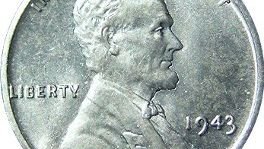
Few coins in American history have captured the public imagination quite like the 1943 copper penny. It sits at the crossroads of wartime sacrifice, minting error, and collector obsession, and for good reason. The highest price ever paid for a 1943 copper penny was over $1 million, with a 1943-D Denver Mint copper penny selling for $1.7 million at auction in 2010. The problem is that fakes are everywhere, and most people have no idea how to tell a genuine piece from a very convincing imitation. This guide cuts through the noise and gives you the tools to find out exactly what you are holding.
Everything You Need to Know: The Key Facts, Tests, and Red Flags for the 1943 Penny

The story of the 1943 penny is one of the most compelling in all of numismatics. During World War II, the United States Mint began saving copper from currency production for ammunition and other military purposes. Because of that, many previously copper-made U.S. coins were replaced with zinc-coated steel in 1943. At the Philadelphia Mint and San Francisco Mint, however, a few copper pennies were still mistakenly struck on copper planchets, making the 1943 copper pennies rare, high-value coins because, in theory, they should not even exist.
The scale of normal production that year makes the rare copper errors even more astonishing. More than one billion 1943 steel wheat pennies were made in total: 684,628,670 at Philadelphia, 217,660,000 at Denver, and 191,550,000 at San Francisco. Against that backdrop of billions of steel cents, the tiny handful of copper ones that slipped through represent one of the most dramatic minting accidents in U.S. history. The points below cover everything you need to know to separate fact from fiction.
1. The Wartime Reason These Pennies Even Exist

A copper shortage in 1943 led the U.S. Mint to issue steel pennies instead of copper pennies. The reallocated copper served much-needed purposes for military equipment including armored tanks, airplanes, weapons, and ammunition jackets. This was a calculated, government-mandated decision, not a small administrative change. The Mint ran through a range of experimental substitutes before settling on its solution.
The U.S. Mint tested several metals and materials, including plastic. In the end, Congress approved a composition of 99% steel and a coat of zinc. The zinc-steel combination made the 1943 penny look very different from its predecessors. Since it resembled a silver coin, many people started calling it “the silver penny,” and others believed it was actually made of silver. That confusion is worth keeping in mind because it fuels misidentification to this day.
2. Just How Rare Is the Real Copper Version?

Far ahead of the 1955 doubled die cent in rarity, the 1943 copper cent is one of the notable rarities of the Lincoln cent series. An estimated 40 examples are believed to have been struck, with 13 confirmed to exist. The error occurred when copper planchets were left in the press hopper and press machines during the changeover from copper to steel blanks. The gap between how many were likely struck and how many have been confirmed is striking on its own.
It might be a long shot, as only around 40 of these coins are known to remain. Of those, we can trace approximately 10 to 15 back to the Philadelphia Mint, five to the San Francisco Mint, and one to the Denver Mint. Those numbers translate directly into value. The rarer the mint, the more extraordinary the price at auction, and every new authenticated discovery sends shockwaves through the numismatic world.
3. The Magnet Test: Your First and Fastest Checkpoint

The easiest way to determine if a 1943 cent is made of steel, and not copper, is to use a magnet. If it sticks to the magnet, it is not copper. If it does not stick, the coin might be of copper and should be authenticated by an expert. This is the single most accessible at-home test available, and it eliminates the vast majority of fakes in under three seconds.
The 1943 copper pennies are made of bronze, consisting of 95% copper and 5% tin and zinc, so they will not be attracted to a magnet. In contrast, the common 1943 steel pennies will stick to a magnet due to their steel composition with a zinc coating. One important caveat: some Chinese counterfeit 1943 Lincoln pennies are especially demanding since they are made from copper planchets and will not stick to a magnet, and they are only detectable by experienced specialists and third-party grading services. So while the magnet test is your starting line, it is never the finish line.
4. The Weight Test: Precision Makes the Difference

Genuine 1943 copper pennies weigh about 3.11 grams, whereas the steel versions weigh about 2.7 grams. Using a precise scale can help differentiate a real copper penny from a steel one or a counterfeit that might be made from a different material. The difference of roughly 0.4 grams is not something you can feel with your fingers; you genuinely need a precision digital scale that reads to at least two decimal places.
Watch for these red flags: plated steel imposters typically weigh 10% too light at 2.7 to 2.8 grams since steel’s density betrays them, while modern alloy copies often fall between 2.95 and 3.05 grams, close but never quite right. Altered-date coins can also lose weight when fraudsters file “8s” into “3s.” A coin that passes the magnet test but falls short on weight is almost certainly not genuine. Both tests together form the essential preliminary screen before anything more advanced is attempted.
5. The Date Inspection: Spotting the Altered “3”

Because of its collector value, the 1943 copper cent has been counterfeited by coating steel cents with copper or by altering the dates of 1945, 1948, and 1949 pennies. This altered-date method is one of the oldest and most persistent tricks in the forger’s playbook. A real copper penny from 1944 or 1948 weighs the right amount and passes the magnet test, so date integrity becomes a critical factor.
The “3” on a real 1943, whether copper or steel, contains a shape that is unique and is frequently characterized by a larger lower tail. A modified “3” could appear mushy, strange, or obviously like the upper part of an “8.” Check it side-by-side with an authentic 1943 steel cent if possible. A coin may actually be a 1945, 1948, or 1949 copper penny with a retooled date. The “3” on 1943 copper pennies should have the unusually long tail, just like that on any 1943 steel cent. A loupe or magnifying glass is your best friend here.
6. Color and Visual Appearance: What Genuine Copper Looks Like

Copper pennies fall into one of three color categories: red, red/brown, and brown. The copper tones with age and oxidation. A steel penny will range from light grey to nearly black due to oxidation and handling. Simply looking at the color of a 1943 penny can give you an instant preliminary read on its composition, even before you reach for a magnet or a scale.
Authentic copper cents are distinguished from silver-gray steel cents by their characteristic reddish-brown hue. Carefully inspect plated fakes for damage that can reveal the steel underneath. On a copper-plated fake, the zinc-coated steel body is often exposed at the edges or around the rim where the plating is thinnest. The reprocessing alteration involves the removal of the thin layer of zinc from the steel and then re-plating the result, and because the plating has been re-added well after the original striking of the coin, a lot of the small details like die flow lines and luster are lost.
7. The Sound Test: A Subtle but Reliable Clue

The steel penny will make a dull thud if it makes any sound. Copper pennies, regardless of their zinc and tin content, will make a small and subtle, but distinct ring when they are flipped or dropped. This is not a glamorous test, but it is a legitimate one that can support the other checks you are already performing. The acoustic difference between steel and copper is real and consistent.
It does come with a practical caution, though. It is inadvisable to drop your penny on the ground as it may hold value. Handling a potentially valuable coin casually is never wise. If you decide to perform the sound test, do it over a soft, clean surface, and treat the coin as though it is already worth something, because it might be.
8. The Mint Mark: Why Location Changes Everything

Yes, 1943 copper pennies exist with mint marks from all three mints that were operational at the time: Philadelphia, which has no mint mark; Denver, marked with a “D”; and San Francisco, marked with an “S.” The presence of a mint mark can significantly affect the penny’s value, with the 1943-D copper penny being one of the most valuable due to its extreme rarity. For context, that single Denver coin sold for $1.7 million, a figure that stands as a record for this series.
The 1943-D copper penny is the rarest of the three, with only one confirmed specimen, and its scarcity makes it one of the most valuable coins in U.S. history. The San Francisco Mint, marked with an “S” under the date, produced 191,550,000 coins in steel that year, and only five copper examples are known from that facility. The mint mark is located on the obverse, directly below the date. Philadelphia cents have no mint mark, Denver cents show a small “D,” and San Francisco cents display a small “S.” The mint mark is small but clearly visible with the naked eye on circulated coins and obvious on uncirculated examples.
9. Known Counterfeiting Methods and How to Recognize Them

Since the 1950s, various manipulations have been used to make common copper pennies from the 1940s appear to be genuine 1943 off-metal errors. As some of these altered coins can be deceptive to a non-expert, third-party authentication is essential. Counterfeiters have had decades to refine their methods, and the techniques in use today are more sophisticated than ever before.
From that point onward, counterfeiters tried to make the mass-produced copper pennies seem like the rare 1943 models. One common counterfeiting method was to coat steel cents with copper or to edit the date mark on pennies produced in 1945, 1948, or 1949. As many of these faux coins look and feel like the real deal, it is critical to seek third-party authentication to determine authenticity. No matter how many home tests you run, a well-made fake can fool even experienced collectors without expert analysis.
10. Professional Authentication: The Only Way to Be Certain

Due to the high value of genuine 1943 copper pennies, the best way to confirm authenticity is through professional grading services like PCGS or NGC. These organizations have the expertise and equipment to authenticate a coin accurately. Without their certification, no reputable dealer or major auction house will touch a coin, regardless of how convincing it looks to the naked eye.
For a fee, these services will authenticate your coin and, if genuine, place it in a secure, market-accepted coin holder. This process is a requirement before any coin dealer will purchase the coin or before any major auction service will agree to sell it. Avoid cleaning the coin, as doing so can decrease its value. Getting a professional assessment will help determine its authenticity and potential value. Cleaning is one of the most common and irreversible mistakes first-time finders make, and it can strip thousands of dollars from what might otherwise be a landmark discovery.
The Bottom Line on Owning a Piece of Wartime History

The 1943 copper penny remains one of the most counterfeited coins in American numismatics, precisely because the reward for finding a genuine one is so extraordinary. A copper 1943 penny is worth an average of $85,000. Some are worth much more than that. One 1943-D copper penny commanded $1.7 million when it sold at auction in 2010. Other 1943 copper pennies routinely sell for $100,000 to $200,000. Those numbers make the counterfeit market inevitable and aggressive.
The path to knowing what you have is methodical and sequential: start with the magnet, confirm with the scale, examine the date under magnification, study the color and the mint mark, and then, if everything looks promising, put it in the hands of PCGS, NGC, or CAC. When 16-year-old Don Lutes Jr. found a strange copper-colored penny in his high school cafeteria change in 1947, he had no idea he had discovered a numismatic treasure. His family would eventually sell that same coin for $204,000 in 2019. The coin you are holding right now deserves the same careful attention he gave his. Do not guess, do not clean it, and do not skip the professional step.