
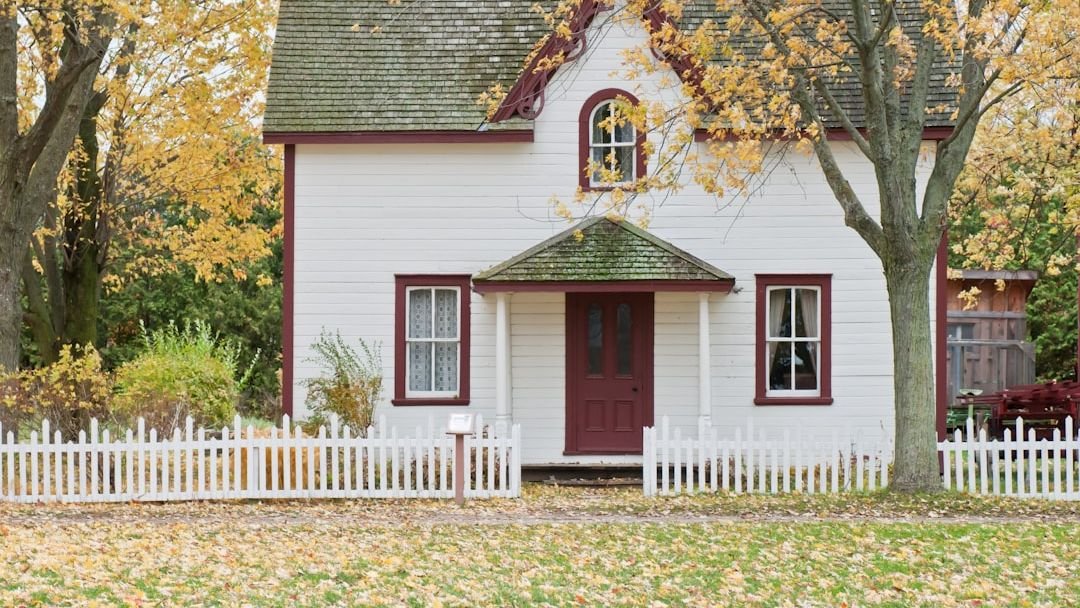
The dream is vivid. A lake house at sunrise. A beach condo in January. A little mountain retreat where the grandkids visit in summer. For millions of American retirees, owning a second home has long felt like the ultimate reward for decades of hard work. It’s the kind of plan that gets pinned to refrigerators and scribbled in retirement notebooks.
But here’s the reality check nobody gives you at the closing table. The sticker price of a second home is just the beginning. Underneath it lies a slow, steady avalanche of costs that catch even the most financially prepared retirees completely off guard. More and more are choosing to sell, and once you understand why, the decision starts to make a lot of sense. Let’s dive in.
The True Scale of Annual Ownership Costs Nobody Talks About
Let’s start with the big picture, because the numbers are genuinely shocking. The average annual costs associated with owning and maintaining a typical single-family home in the U.S. amount to $21,400 in 2025, according to Bankrate’s Hidden Costs of Homeownership Study. Now multiply that discomfort by two, because retirees with a second home are absorbing a nearly identical burden on top of their primary residence expenses.
These costs are often called “hidden” because they’re overlooked or unforeseen by homeowners when budgeting to buy. Yet they are a constant reminder that the true cost of homeownership goes well beyond the property’s purchase price and the scheduled mortgage payments. For someone on a fixed retirement income, that’s not a rounding error. That’s a financial earthquake.
The most important question retirees need to ask themselves is whether they have enough retirement income and assets to support the carrying cost of two houses. This requires running detailed retirement projections to determine total expenses and the spending down of assets over life expectancy to make sure you do not run out of money. Most people skip this step entirely.
Soaring Property Taxes That Never Stop Climbing

Property taxes feel like background noise until they’re not. Property taxes for single-family residences have risen an average of roughly a quarter from 2019 to 2024. Once they go up, they often lag in going down, even if housing prices soften. For a retiree on a fixed income, that kind of one-directional pressure is brutal.
The math becomes brutal when property taxes claim a significant portion of fixed income. Meanwhile, inflation rose year-over-year through December 2025, continuously eroding purchasing power on essentials like groceries, utilities, and healthcare. Second homes often don’t qualify for homestead exemptions or senior tax relief programs, so owners pay the full unprotected rate.
In some states, recent legislative changes are actively shifting more of the property tax responsibility to people with second homes. This is making second-home ownership materially more expensive in several vacation-heavy markets. It’s a trend, not an anomaly. Retirees who bought their beach or mountain retreats under one tax regime are now operating in a different, more expensive one.
Homeowners Insurance: A Crisis in Many Popular Retirement Destinations

This is perhaps the most explosive cost story of recent years. Homeowners insurance premiums have grown by roughly a quarter nationwide from 2021 to 2024. The growing frequency of extreme weather events and natural disasters has played a major part in driving this increase. And second homes, which sit disproportionately in coastal, mountain, or flood-prone areas, are hit hardest.
According to Insurify, the average homeowner will pay an extra $261 in insurance premiums by year’s end, with Florida remaining the most expensive state at average annual premiums projected to reach $15,460 in 2025. That’s nearly the equivalent of an extra car payment every single month, just for insurance on one property.
In 2024, Florida’s frequent hurricanes, including Helene and Milton, inflicted more than $100 billion in damages. Nearly 458,000 hurricane claims were filed statewide last year, and climate disasters since 2020 have cost Florida roughly $237 billion. The ripple effect? Insurers are exiting those markets, leaving remaining policyholders to shoulder enormous premium spikes. Honestly, for many retirees, it’s simply become unworkable.
HOA Fees: The Monthly Bill That Just Keeps Growing
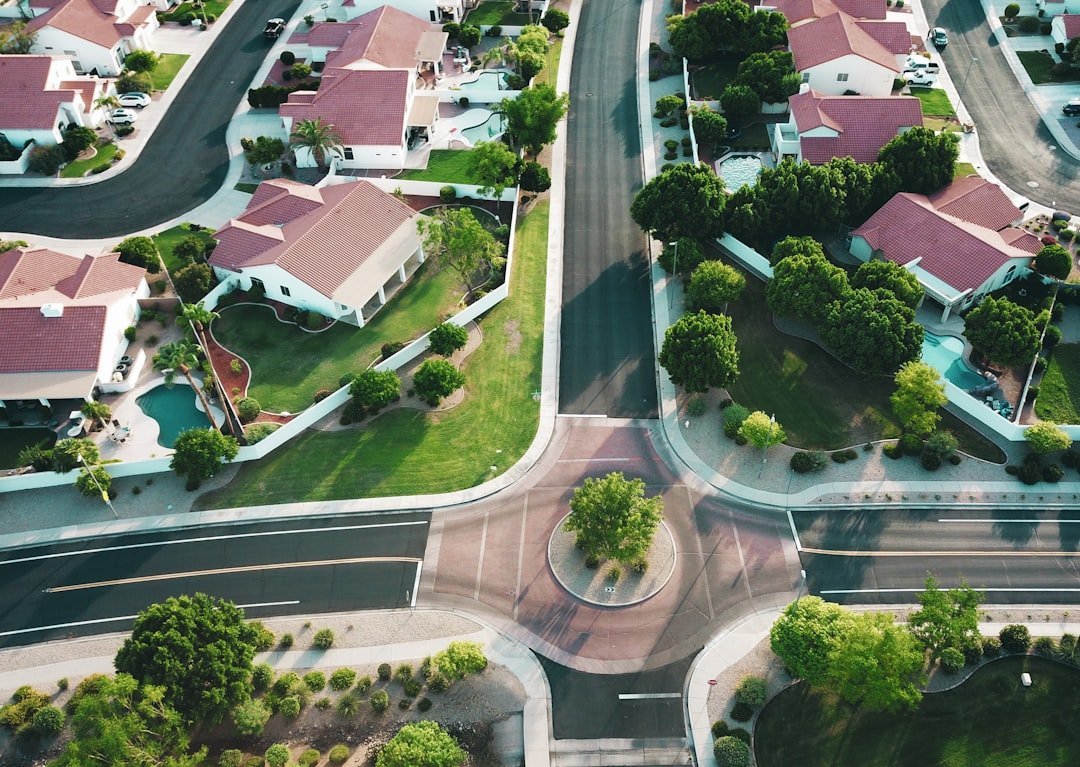
Homeowners association fees were once considered a minor nuisance. Today, they have become a headline financial risk for retirees. A Redfin study from August 2024 shows that the median cost of HOA fees in more than 40 of the country’s most populated metro areas jumped by nearly 6 percent in just one year. In some places, the increases were far steeper.
In Tampa, HOA fees jumped more than 17 percent year-over-year as of July 2024, reaching a median of $614 per month, the steepest increase among 43 U.S. metro areas analyzed by Redfin. Orlando and Fort Lauderdale followed closely, with fees rising nearly as fast. Other Florida cities including West Palm Beach, Jacksonville, and Miami also saw significant increases. Those are not rounding errors. Those are life-changing bills for retirees on fixed income.
The financial strain is particularly challenging for retirees and those on fixed incomes, many of whom are being forced to sell and relocate due to unaffordable fees. In some cases, even condos without amenities are seeing HOA fees exceed $1,000 per month, compounding the financial difficulties faced by owners. Add a special assessment on top of that, and the whole retirement plan starts to unravel fast.
Maintenance and Repairs: The Double Burden of Two Properties

Here’s the thing most people forget when romanticizing a second home. Every single maintenance task you do at your primary residence, you now do twice. A second home needs regular maintenance, dealing with unexpected repairs, and all the chores you have at your primary home, doubled. If you’re thinking about renting it out, you can add time to manage bookings, handle guest communications, and sort out the cleaning between stays. That’s not retirement. That’s a second job.
Homeowners can expect to spend up to 4 percent of their home’s value on annual upkeep. Roughly four out of five homeowners experienced an unexpected maintenance issue in 2024. For a second home sitting vacant for months, issues can fester unnoticed, turning small problems into expensive disasters. Think of a burst pipe in February with nobody around to catch it.
One of the most common mistakes retirees make is underestimating the impact of inflation on ongoing costs. Property taxes, utilities, association dues, maintenance, homeowners insurance, and water bills tend to go up each year. If those expenses rise by just a few percent per year, retirees may find they can no longer afford both properties down the road. The math quietly turns against you over time.
The Mortgage Rate Trap for Second Homes

Not every retiree buys a second home outright in cash. Many finance it, and the rate environment for second homes is consistently worse than for primary residences. Second-home mortgage rates are about 0.5 percent higher than those for primary residences, typically ranging from 6 to 7 percent in 2025. That half-point difference compounds into real money across a 15 or 30-year loan.
Lenders have also imposed stricter lending requirements for second homes, including larger down payments, often exceeding the standard 20 percent, and requiring more in-depth financial information. This means retirees who want to tap into savings or retirement accounts to qualify face an even deeper financial drain than they anticipated when they first fell in love with the property.
According to recent Redfin data, mortgage demand is sluggish across the board due to high home prices and elevated interest rates, but mortgage demand for second homes is especially slow. This may be due to second homes being more expensive than primary residences, people going back to the office with less time to spend at a vacation home, and general economic uncertainty. Even the people still buying are hesitating. That tells you something.
The Tax Complexity Nobody Warned You About

A second home doesn’t just cost more to own. It costs more to manage from a tax perspective. Retirees often forget about the full tax picture. If you have to take larger distributions out of pre-tax retirement accounts to maintain the second home, those larger distributions could push you into a higher tax bracket and cause Medicare premiums to increase. That’s a cascading effect most retirement planners don’t model carefully enough.
You can deduct property taxes on your second home. However, for tax years 2025 through 2028, the total of all state and local taxes deducted, including property and income taxes, is limited to $40,000, subject to reduction depending on your income level. This expanded SALT cap provides some relief compared to prior limits, but it still requires careful planning to maximize.
Many second-home buyers rent out the property part of the year, and very different tax rules apply depending on the breakdown between personal and rental use. Get it wrong, and the IRS can reclassify your property in ways that eliminate deductions you were counting on. It’s complicated enough to need a specialist, which itself costs money.
Demand Has Collapsed: Selling Is Harder Than You Think
Here’s an uncomfortable truth for anyone planning to eventually sell their second home to fund retirement. The market has cooled dramatically. U.S. homebuyers took out 86,604 mortgages for second homes in 2024, the lowest level in records dating back to 2018 and down 5 percent from a year earlier, according to a Redfin analysis of Home Mortgage Disclosure Act data. The pool of willing buyers has shrunk significantly.
Second-home mortgages made up just 2.6 percent of all mortgages in 2024, the lowest share on record, down from 2.8 percent the year before and a peak of 5 percent in 2020. Demand for all home types was slow in 2024 because it was the second-least affordable year for homebuying on record, due to high home prices and mortgage rates. A seller’s dream of 2021 has become something far less predictable.
Second home demand has cooled since 2020 due to high interest rates, with nearly a quarter of listings seeing price cuts in January 2025. This means many retirees hoping to cash out at peak prices may find themselves holding a depreciating asset in a thin market. A house is an illiquid asset. When you look at your total net worth, you have to be careful how much of it is tied up in real estate. In retirement, if the economy hits a recession and retirement accounts take a hit, you may be forced to sell that second home when everyone else is also trying to sell.
The Emotional and Physical Toll Nobody Puts on a Balance Sheet

Let’s be real for a moment. The costs of a second home aren’t all financial. There’s an enormous invisible tax that comes in the form of stress, time, and physical burden. As people age, managing the day-to-day upkeep of homes can become a real burden, and one that may eventually be too much to handle. Two sets of everything. Two sets of worries.
Research from Hire A Helper found that the primary reasons retirees move are to be close to family and for health reasons. Family reasons were cited as the primary reason for 16 percent of moves, while 11 percent listed health issues as their main reason for relocating. A second home located far from family or healthcare providers can actually contradict the most important priorities of later life.
For many, owning a second home increases the standard of living required, meaning you need more money each month to retire comfortably. One way to handle it is to live on less, cutting expenses to make room for the costs of the second home. Or it could mean working longer and retiring later to earn the extra income needed to afford what is, fundamentally, a liability. That’s a trade-off worth naming clearly.
The Bigger Picture: A Generational Shift in Retirement Strategy

Something real is shifting in how older Americans think about homeownership. Baby Boomers now make up the largest share of home sellers at 53 percent. Sellers in the oldest age groups are most likely to downsize. Baby Boomers and the Silent Generation are selling to move closer to friends and family or because their homes are too large. The dream of accumulating property is quietly giving way to the goal of simplifying life.
From 2013 to 2023, the number of people aged 65 and above renting their homes increased by 2.4 million, representing almost a 30 percent rise. Today, more than 10 million renters are over 65, making up more than 13 percent of all renters. That’s not a failure. For many, it’s a deliberate, liberating choice to stop bleeding money into property and start spending on experiences and freedom instead.
According to the Joint Center for Housing Studies at Harvard University, a disproportionate share of the recent growth in homeowner cost burdens was among older adults. Nearly half of the overall increase in cost-burdened homeowners between 2019 and 2023 were those aged 65 and over. As a result, there were 7.9 million burdened homeowners aged 65 and over in 2023, which represented more than one in four owners in this group. These are not small numbers. This is a systemic financial stress affecting millions of real people trying to enjoy their retirement years.
Conclusion
The second home is one of those ideas that looks flawless on paper and lives differently in the real world. From surging insurance and HOA fees to property tax increases, maintenance headaches, illiquidity risk, and the quiet emotional toll of managing two properties, the actual cost profile is something few retirees fully grasp before they sign the deed. It’s hard to say for sure that every second home is a mistake. For some, with the right finances and the right property in the right market, it absolutely works.
The data, though, tells a clear story. Demand is falling. Costs are climbing. And more retirees than ever are choosing to simplify rather than stretch. Selling the second home isn’t giving up on the dream. In many cases, it’s finally living it fully, without the financial weight holding everything back.
What would you do if you added up every hidden cost of your second home? Would the number surprise you? Tell us what you think in the comments.