

Retirement used to feel like a finish line. You clocked out for the last time, collected your pension, and embraced the quiet life. For millions of Americans, though, that story has a new chapter, one involving flexible hours, part-time gigs, and something researchers are calling “bridge employment.”
The numbers are surprising. The shift back into the workforce among retirees is not a niche quirk or a financial emergency for most. It is a full-blown social trend reshaping the way we think about what happens after 65. Let’s dive in.
What Exactly Is a “Bridge Job”?

Bridge employment is generally defined as having gainful employment while receiving any type of pension. It is usually seen as a temporary and transitional phase between active employment and permanent retirement, where individuals engage in reduced or modified work arrangements, either due to partial retirement options, changing health needs, or shifting financial demands.
Think of it like a highway on-ramp in reverse. Instead of accelerating into full-time work, retirees are gradually decelerating. They are not fully stopping. A bridge job is a part-time or flexible employment opportunity that serves as a transition between full-time work and full retirement.
The “job-stopping” process of older workers often includes some combination of postcareer “bridge” employment, partial retirement, and reverse retirement. Fewer than two-fifths of household heads retire directly from career jobs, over half partially retire at some point in their working lives, and a quarter reenter the labor force after initially retiring. Honestly, that data flips the whole “retirement is a cliff” narrative completely on its head.
The Scale of the “Unretirement” Wave

One in four Americans in the 65-and-over age bracket remain in the workforce, and more plan to rejoin it for a variety of reasons including rising costs, boredom, and job satisfaction. That is not a small fringe group. That is a quarter of an entire generation.
T. Rowe Price’s latest annual “Retirement Savings and Spending Study” found that about 20 percent of retirees are working either part- or full-time. Indeed Flex, a website that helps people find temporary work, reported its usage among people age 62 and older had grown 70 percent compared with January 2024.
The number of employed Americans age 65 and older has grown more than 33 percent between 2015 and 2024. By comparison, the labor force for all workers 16 or older increased less than 9 percent during the same period. That gap tells you everything. Older Americans are re-entering work at a pace that vastly outstrips the general workforce trend.
The Part-Time Preference: What the Data Actually Shows
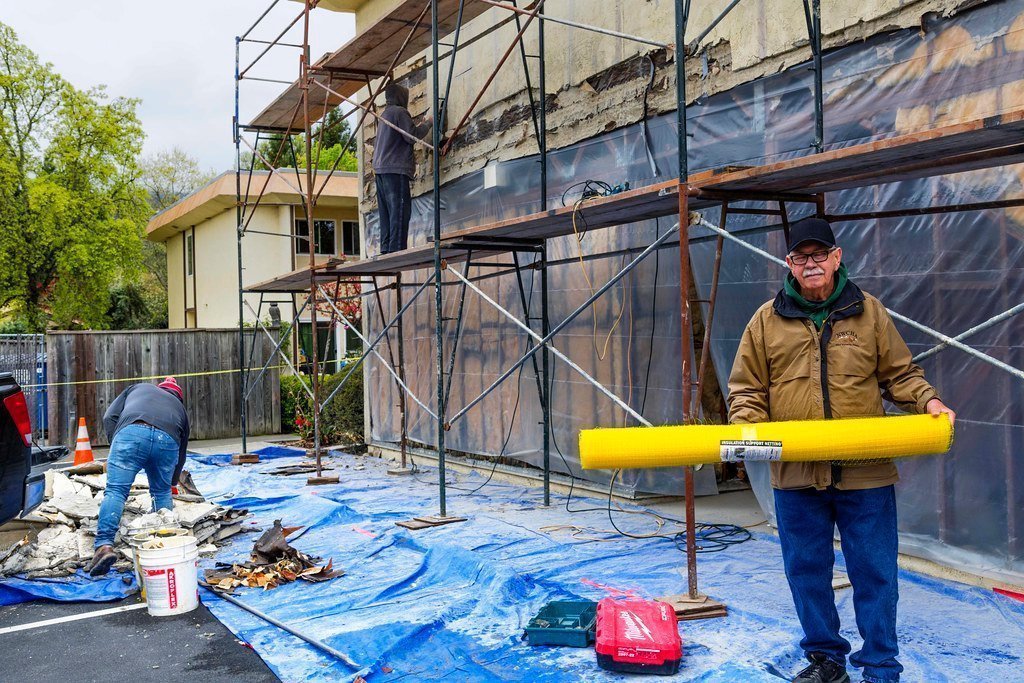
Among employed people age 65 and older, 38.3 percent worked part time in 2024. By comparison, 14.2 percent of workers ages 55 to 64 and 11.1 percent of workers ages 25 to 54 worked part time. Let that sink in. Older Americans are more than three times as likely as prime-age workers to be in a part-time role.
In 2024, about one in five people age 65 and older participated in the labor force by working or looking for work. However, older Americans who continue to work often shift toward part-time rather than full-time employment. It is not about grinding. It is about balance.
Older workers strongly prefer jobs that entail less strenuous physical activity and allow for greater independence and more flexible work schedules. Recent research shows that many occupations, on average, have become more “age friendly” since 1990. The modern job market is quietly becoming much more welcoming to this demographic than most people realize.
Financial Pressure: The Real Driving Force

Let’s be real. For a big portion of returning retirees, money is at the heart of it. An AARP survey, which polled nearly 2,400 adults aged 50 and older during winter 2025, found that 48 percent of those who unretired cited financial necessity or a poor economic outlook as their primary reason for returning to work. Another 41 percent of people 50 and older who are currently working or job hunting said their main motivation is simply affording everyday living costs, including groceries, housing, medical bills, and utilities that have climbed steadily since the pandemic era.
The same AARP data shows that 20 percent of adults aged 50 and older have no retirement savings at all, and more than half, 61 percent, are worried they will not have enough money to support themselves through retirement. These are not abstract worries. They are the everyday arithmetic of people trying to make ends meet.
The top reasons seniors returned to work include the cost of living increasing more than expected, cited by roughly half, boredom cited by about two-fifths, and insufficient retirement savings cited by more than a third. Cost of living leads the list, but notice that boredom comes in second. Not all of this is desperation. Some of it is deliberate and chosen.
More Than Money: Purpose, Identity, and Social Connection

Here is the thing that surprises people most. Financial need does not tell the whole story. Current literature shows that retirees step in and out of bridge jobs for various reasons, including fulfilling current and anticipated financial needs, maintaining social engagement, developing new skills, and mentoring younger generations.
Bridge employment was strongly related to both retirement satisfaction and overall life satisfaction. Volunteer work and leisure activity complemented bridge employment in facilitating adjustment to retirement. That is a powerful finding. A bridge job is not just a paycheck. It is often a source of genuine wellbeing.
A study published in the Journal of Occupational and Organizational Psychology found that older workers who continued to work in some capacity experienced lower levels of depression and anxiety compared to those who fully retired. Moreover, staying active through work can contribute to better physical health outcomes, as it often involves physical activity, social interaction, and cognitive stimulation. I think this is one of the most underreported aspects of this whole trend. We are not just talking about income supplements. We are talking about mental health lifelines.
Bridge Jobs and Longevity: A Surprising Health Connection

The health angle here is fascinating and, I’ll admit, a little unexpected. A major cohort study found that compared to retired or nonemployed men and women, hazards of all-cause mortality were lower in older people with bridge employment, with a hazard ratio of 0.82 for men and 0.79 for women in healthy populations.
The protective effect of bridge employment was stronger among older adults living in rural areas and among those from a relatively low socioeconomic status. This suggests that bridge employment could be especially valuable precisely for those who need it most.
It’s hard to say for sure whether the work itself drives better health, or whether healthier people simply choose to keep working. The research points in both directions. Still, the pattern is clear. Research on the role that health plays seems consistent, with better health predicting a higher likelihood of having a bridge job. Work and wellness, it turns out, are more tightly linked in later life than most retirement planning accounts for.
The Industries Welcoming Older Workers Back

Healthcare, education, and retail are the top industries hiring older workers, though 67 percent of older job seekers say finding work is difficult due to age discrimination, creating both opportunities and challenges for a multigenerational labor market.
Over one million workers aged 65 and older were employed in education in 2024. Schools and colleges facing teacher shortages are increasingly turning to retired educators who can step back into classrooms, sometimes part-time or as substitutes, bringing decades of pedagogical experience.
Major employers like Costco, Home Depot, Walmart, and L.L.Bean have built reputations for hiring workers over 50, offering competitive pay that sometimes exceeds 30 dollars per hour, along with flexible schedules and benefits packages tailored to this demographic. That is a real shift from the outdated idea that older workers get pushed to the sidelines.
The Age Discrimination Problem That Won’t Go Away

Not everything about returning to work is smooth or welcome. There is a stubborn and deeply frustrating obstacle blocking the path for many. About two-thirds, 64 percent, of workers age 50-plus have reported seeing or experiencing age discrimination in the workplace, a proportion that has not changed since 2024.
Nine in 10 workers over the age of 50 said they have experienced ageism in the workplace, according to a Resume Now survey conducted in May 2025. The survey revealed a major disconnect between older and younger workers, with 83 percent of older workers saying they felt occasionally disrespected.
AARP’s survey found that many workers report experiencing subtle forms of age discrimination, such as assuming older employees are less tech-savvy, assuming they are resistant to change, not acknowledging their accomplishments or expertise, and giving preference to younger employees for training. The results are within two points of those from a 2024 AARP survey, indicating little progress has been made despite a rapidly changing workforce. This is a real problem that no amount of positive unretirement narratives can paper over.
How Policy and Social Security Intersect With Bridge Work

Policy changes have discouraged early retirement. Changes to the Social Security system, which raised the age that workers receive their full retirement benefits from 65 to 67, likely have encouraged older adults to delay retirement and continue working, according to labor economists.
As more Americans work past traditional retirement age, there are growing implications for Social Security benefit calculations, Medicare eligibility, and tax policy. Workers who unretire before their full retirement age may see their Social Security benefits temporarily reduced, and earning above certain thresholds can trigger unexpected tax consequences.
The benefits that are withheld from Social Security due to the earnings test are not lost forever. They are given back to you once you reach full retirement age. Still, navigating all of this requires real planning. Going back to work without understanding these rules is like driving on a road with invisible speed bumps. You will feel every one.
The Future of Bridge Employment: A New Normal?

Retirees re-entering the workforce, popularly termed as bridge employment, is a phenomenon that is anticipated to increase in the coming years. The Bureau of Labor Statistics projects the labor force participation rate for workers aged 75 and older will exceed 10 percent by 2026, while the number of workers aged 65 and older is expected to rise 57.6 percent from 2016 to 2026.
Research reveals that bridge employees uniquely reconstruct the meaning of retirement as a frontier between “prioritizing the obligations” and “prioritizing self,” allowing retirees to prioritize self-directed goals during bridge employment. That is a profound reframing. Retirement is no longer the end of contribution. It is the beginning of a different, more intentional kind of work.
Retirement plans have evolved. Employers have shifted their retirement plan offerings toward defined contribution plans such as 401(k)s and away from defined benefit plans. The old-style pensions incentivized workers to retire at a specific age, whereas defined contribution plans do not encourage early retirement. The structure of modern finance is quietly nudging millions of people toward keeping one foot in the workforce longer than any previous generation ever did.
Conclusion: The Bridge Is Now the Destination

The “bridge job” trend is not just a financial workaround. It is a genuine cultural shift in how Americans experience their later years. Work, for a growing number of retirees, is something chosen rather than imposed, something meaningful rather than mandatory.
The data makes it clear. From AARP surveys to Bureau of Labor Statistics projections, from academic studies on mental health to real-world hiring trends in healthcare and education, the picture is consistent. Older workers are returning, they are doing so in large numbers, and many of them are better off for it.
Whether the motivation is a slim savings account or a hunger for purpose, the result looks surprisingly similar. A generation that was told to step aside is quietly stepping back in, on its own terms. What would you choose if retirement left you with more time, but less meaning?