
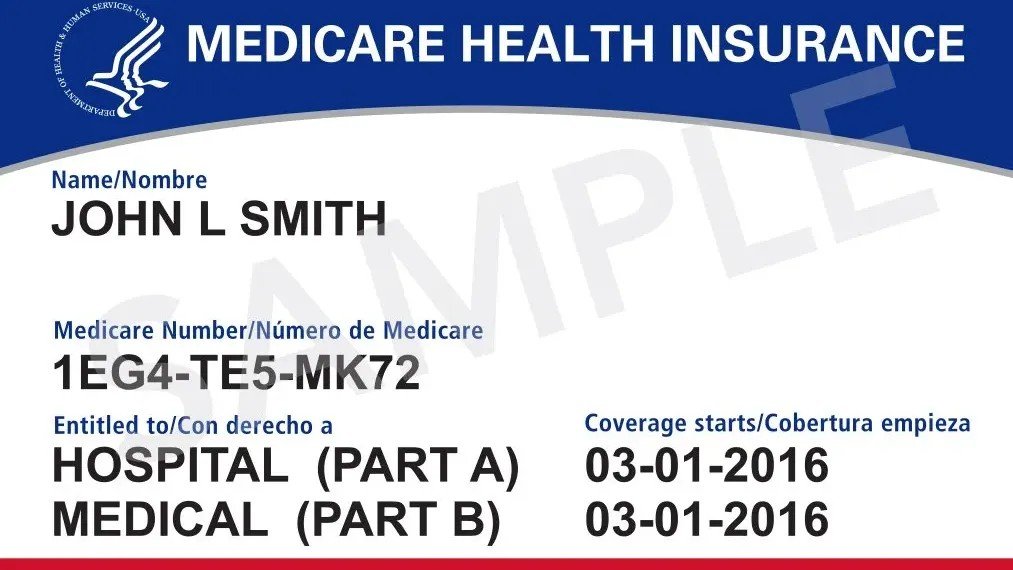
Every single day, Americans turn 65 without knowing they are sitting on a financial time bomb. The trigger is one government form. The explosion is a lifelong monthly penalty that compounds silently for the rest of your retirement, growing in real dollar terms every year the base premium rises. Most people never see it coming until the bill lands in their mailbox and there is nothing left to do about it.
The form at the center of all of this is called Form CMS-40B. It is not complicated, it does not take long to complete, and it can be obtained in minutes. Yet countless Americans miss the filing window each year, and the financial damage is permanent. This guide walks through ten critical things you must understand about Medicare enrollment before that 65th birthday arrives. Be prepared to rethink a few assumptions you may have held for years.
Here Are the 10 Things Every American Approaching 65 Needs to Know About Medicare Enrollment, Deadlines, and Lifelong Penalties

The ten points below cover everything from the exact form you need to file, to the enrollment windows you cannot afford to miss, to the permanent financial penalties that activate when you do. They also walk through who is automatically enrolled, who is not, what employer coverage actually protects you, and why even prescription drug gaps can cost you money every month for decades.
Whether you are two years away from turning 65 or already past it, understanding these rules can mean the difference between paying the standard Medicare premium and paying a permanent surcharge for the rest of your retirement. Read carefully before making any decisions about your coverage.
1. Form CMS-40B: The Medicare Part B Application That Changes Everything at 65

Form CMS-40B, officially titled the Request for Enrollment in Medicare Part B (Medical Insurance), is the document you use if you already have Medicare Part A and want to sign up for Part B. It allows eligible seniors and certain younger individuals with disabilities to enroll in Part B, which helps pay for doctor visits, outpatient care, and preventive services. Without it, you simply do not have Part B coverage, no matter how many years you spent paying Medicare taxes through your paycheck.
You can submit your completed and signed form by mail, fax, or by visiting your local Social Security office in person, with office locations available at SSA.gov/locator, and you can call Social Security at 1-800-772-1213 with questions. If you are enrolled in Part A but not Part B and want to apply within a Special Enrollment Period, you must also attach Form CMS-L564 alongside CMS-40B. Think of it like registering for a flight you have already paid for. The ticket exists, the seat is waiting, but nobody boards without the boarding pass.
The deadline for Form CMS-40B is generally during your Initial Enrollment Period, which lasts seven months, beginning three months before you turn 65 and ending three months after your birthday month. Getting that form in on time is the entire ballgame.
2. The 7-Month Initial Enrollment Period: Your Primary Chance to Sign Up Without Penalty

The Initial Enrollment Period begins three months before the month you turn 65 and ends three months after your birthday month. That is your primary window. Filing early within that window is not just smart planning, it also determines exactly when your coverage actually starts. To have Part B coverage start the month you turn 65, you must sign up in the first three months of your Initial Enrollment Period.
If you wait until your birthday month itself, or the months following, your coverage gets delayed. Miss the window entirely without a qualifying reason, and the situation becomes considerably worse. If you miss this window, you can still apply during the General Enrollment Period from January 1 to March 31 each year, but your coverage will not start until July 1. That gap in coverage, combined with the penalty that kicks in, is a double problem that could have been avoided with one timely form.
3. The Permanent Penalty: 10 Percent Per Year, Added Forever, With No Way to Remove It

Medicare charges a 10 percent penalty for each full 12-month period you were eligible for Part B but did not sign up, and that penalty is based on the standard Part B premium, which is $202.90 in 2026. This penalty continues for as long as you have Medicare Part B, there is no end date. The Part B late enrollment penalty is permanent, and unlike some Medicare costs that can change based on your situation, it stays with you for as long as you have Part B coverage.
If you delayed enrollment in Part B for seven years without qualifying employer insurance, your monthly premium would be 70 percent higher for as long as you have Medicare, and since the base Part B premium in 2026 is $202.90, your monthly premium with the penalty would be $344.93. Over a 20-year retirement that translates to nearly $34,000 in unnecessary extra payments, and that math only gets worse as base premiums rise year after year. Since Part B premiums usually rise each year, your late enrollment penalty usually rises as well.
4. Who Is and Is Not Automatically Enrolled: The Assumption That Costs Thousands

Here is the thing that trips up more people than almost anything else in Medicare enrollment. There is a widespread belief that everyone gets a Medicare card in the mail when they turn 65. That is simply not true. Automatic enrollment only applies to a specific group. Approximately 99 percent of Medicare beneficiaries do not pay a Part A premium, having satisfied the requirement of at least 40 quarters of Medicare-covered employment. However, automatic Part B enrollment is a separate matter entirely tied to whether you are already receiving Social Security benefits.
If you are not yet collecting Social Security when you turn 65, no card arrives, no enrollment happens, and no one sends you a reminder. The responsibility falls entirely on you. The CMS-40B and CMS-L564 forms are critical for individuals who missed their initial enrollment period at age 65 and want to avoid penalties or coverage gaps. Many financial planners recommend delaying Social Security until age 67 or even 70 to maximize lifetime income, which is sound advice for retirement income strategy. The trap is that it severs the automatic Medicare enrollment link, and that distinction can cost you dearly if you do not act independently.
5. The Special Enrollment Period: When You Can Delay Without Penalty, and When You Cannot

You may be able to delay enrolling in Medicare if you or your spouse is still working and you have health insurance through either of your employers. This protection is called the Special Enrollment Period (SEP), and it is the legitimate path that working Americans use to defer enrollment without owing a penalty. The key word, and this is critical, is “current.” The coverage must come from active, current employment, not from retirement plans, not from COBRA, and not from the individual marketplace.
The SEP extends for eight months after that employment or coverage ceases. After losing your job-based coverage, you have to sign up during a special enrollment period while you are working or within eight months of losing your health coverage. To complete this, you fill out the Application for Enrollment in Medicare Part B (CMS-40B) and, if applying during the Special Enrollment Period, also fill out the Request for Employment Information (CMS-L564). Miss that eight-month window, and the clock on your penalty has already started ticking.
6. The Spouse Coverage Trap: A Dangerous and Common Misunderstanding

Honestly, this one catches people off guard more than almost any other Medicare rule. Many people approaching 65 assume that because their spouse is still working and carrying the family health insurance, they are fully exempt from any Medicare obligation. That assumption is only correct under narrow, specific conditions, and getting it wrong can be extraordinarily costly. The employer providing the coverage must have 20 or more employees, the coverage must come from active employment, and your spouse must currently be working.
The CMS-L564 form, also known as the Request for Employment Information, verifies an individual’s group health plan coverage under an employer and is typically required for those who delayed enrolling in Medicare Part B because they or their spouse were covered by employer-sponsored insurance, with employers required to complete Section B to confirm the coverage details including start and end dates. Once your spouse retires and that plan ends, your own SEP clock starts immediately. You have only eight months from the date you lost employer-sponsored coverage to join Medicare without facing a late enrollment penalty for Part A or B. Getting the verification of coverage wrong, or simply assuming you are protected, can mean decades of elevated premiums.
7. Part D Has Its Own Separate Penalty: Skipping Drug Coverage Is Also a Lifelong Mistake

If you go without Part D or other creditable prescription drug coverage for any continuous period of 63 days or more after your Initial Enrollment Period, you may have to pay a late enrollment penalty, calculated as 1 percent of the national base beneficiary premium for each month you were without coverage. The 2026 national base beneficiary premium is $38.99 per month. That means 24 months without coverage adds a permanent monthly penalty of roughly $9.36 every single month going forward.
The national base beneficiary premium changes each year, so your penalty amount may also change each year, and this monthly penalty is added for as long as you have Medicare drug coverage, even if you switch plans. Many people skip Part D because they are healthy and take no prescriptions, treating it like car insurance they would rather not buy. That logic might seem sensible today. It rarely feels sensible after a diagnosis that suddenly makes drug costs a daily reality, especially when a permanent surcharge has been quietly stacking up for years. If you do not agree with your Part D late enrollment penalty, you or your representative can ask for a review, but you generally must request this within 60 days of your first notification.
8. Medicare Part A Rules: Usually Free, But Not Always, and Still With Consequences

Approximately 99 percent of Medicare beneficiaries do not have a Part A premium since they have at least 40 quarters of Medicare-covered employment, as determined by the Social Security Administration. For this group, Part A covers hospital inpatient stays, skilled nursing facility care, hospice, and certain home health services at no monthly premium cost. The only requirement for most people is to actually enroll through Social Security if they are not auto-enrolled, which carries much lower financial stakes than the Part B situation.
For those who do not meet the 40-quarter threshold, the picture changes significantly. Individuals who had at least 30 quarters of coverage, or were married to someone with at least 30 quarters of coverage, may buy into Part A at a reduced monthly premium rate, which will be $311 in 2026. Certain uninsured aged individuals who have fewer than 30 quarters of coverage, and certain individuals with disabilities who have exhausted other entitlements, will pay the full premium of $565 a month in 2026. If you delayed enrollment, you will have to pay the penalty for twice the number of years you did not sign up, so if you were eligible for Part A for two years but did not sign up, you must pay the higher premium for four years. It is a smaller group, but the financial exposure is real.
9. The IRMAA Surcharge: Higher Earners Pay Substantially More, Based on Income From Two Years Ago

The Medicare surcharge in 2026 applies to beneficiaries with income exceeding $109,000 for single filers and married filing separately, or $218,000 for joint filers, with total monthly Part B premiums ranging from $284.10 to $689.90 for these beneficiaries. The SSA determines who pays an IRMAA based on the income reported two years prior, so for 2026 the SSA looks at your 2024 tax returns to see if you must pay an IRMAA. That two-year lookback is what makes this surcharge so easy to accidentally trigger.
IRMAA is a cliff surcharge, meaning just one dollar over the limit will trigger surcharges for both Parts B and D. A large one-time income event such as a Roth conversion, a property sale, or required minimum distributions can unexpectedly push a retiree into a higher bracket for the entire year. If your income has decreased due to a major life event like retirement or divorce, you may request a reconsideration using Form SSA-44. Another reason to appeal is if you experienced a life-changing event such as a loss of income, death of a spouse, marriage, or divorce, and you have 60 days from receiving a notice to file an appeal. Planning income carefully in the years before and immediately after turning 65 can make an enormous difference.
10. The Smart Way to Enroll: File Early, Get Written Proof, and Know Your SHIP Counselors

The most effective protection is deceptively simple. Enroll during the three months before your 65th birthday month. To have Part B coverage start the month you turn 65, you must sign up in the first three months of your Initial Enrollment Period. Partial years do not count toward penalties; if you delayed 25 months, that is only two full penalty periods. Still, any delay at all that falls outside a qualifying exception starts the penalty clock, and there is no reversing it once it is applied.
Always request written confirmation of your enrollment, whether that is a receipt from the Social Security office, a confirmation number from the online system, or a dated letter. If your file is ever lost or misprocessed, documented proof of timely filing is the only way to contest a penalty determination. Processing these forms typically takes two to four weeks, but delays can occur depending on the volume and completeness of the application. For free, unbiased help navigating all of these rules, contact your State Health Insurance Assistance Program (SHIP) at shiphelp.org. SHIP counselors are federally funded, do not sell insurance, and can help you review your specific situation in your state at no cost whatsoever.
One Form, Filed on Time, Protects Your Budget for the Rest of Your Retirement

The standard monthly premium for Medicare Part B enrollees is $202.90 for 2026, an increase of $17.90 from $185.00 in 2025. For the millions of Americans currently paying a late enrollment penalty, that increase hits even harder because the penalty percentage is applied to the new, higher base premium each year. IRMAA surcharges and Part B premium increases far exceed the Social Security cost-of-living adjustment, meaning retirees receiving Social Security will see their Medicare premiums rise more than two and a half times faster than their Social Security benefits, potentially reducing their net income.
The fix is genuinely straightforward. Identify your Initial Enrollment Period, file Form CMS-40B with the Social Security Administration during the three months before you turn 65, keep written proof that you did so, and confirm whether your existing employer plan qualifies as creditable coverage if you plan to delay. If you are already past 65 and believe you may have missed your window, contact a SHIP counselor at shiphelp.org or call Medicare directly at 1-800-633-4227 to understand what options remain. The earlier you address this, the more of your retirement budget you get to keep. What would you have done if you had discovered this penalty too late? Tell us in the comments.