

There’s a quiet revolution happening in how Americans plan for retirement. Millions of people who once circled age 62 on their calendars as the magic number are now rethinking everything. The rules have shifted, the stakes are higher, and the financial math is more compelling than ever before. If you’re approaching your sixties and trying to figure out the best time to claim Social Security, you’ve probably heard a dozen different opinions. Let’s cut through the noise and get to what the data actually shows. Let’s dive in.
The Full Retirement Age Has Finally Landed at 67

It wasn’t always 67. For most of Social Security’s history, 65 was the magic number. Then Congress changed the rules. In 1983, Congress increased the full retirement age from 65 to 67, a change phased in over the course of 33 years. That’s a long runway, but the destination has finally arrived.
The law raised the full retirement age beginning with people born in 1938 or later, and the retirement age gradually increases by a few months for every birth year, until it reaches 67 for people born in 1960 and later. In other words, the phase-in is done. Age 67 is now the permanent benchmark for most working Americans.
This is the final step in a gradual schedule to increase the retirement age from 65 to 67, initiated by the 1983 amendments to the Social Security Act. The legislation was intended to reflect longer life expectancies, reduce financial strain on the program, and bolster the trust fund. So when people call age 67 the “new 65,” they’re not being dramatic. It’s just fact.
What Claiming at 67 Actually Means for Your Check

Individuals can claim old-age Social Security benefits as early as age 62, and monthly benefits increase as one delays claiming up to age 70, but the so-called full retirement age, currently 67, is the age at which an individual can claim a monthly benefit equal to their primary insurance amount. Think of it as your baseline, your 100 percent.
The difference in waiting until full retirement age versus 62 years old can be financially significant, with the Social Security Administration noting that someone retiring at full retirement age in 2024 could get a maximum monthly benefit of $3,822, while someone claiming at 62 would receive a max of $2,710. That’s more than a thousand dollars every single month, for life. Honestly, that gap alone should make you sit up straight.
As of January 2026, over 56 million retired workers and family members received monthly benefits from the Social Security Administration, and the average Social Security monthly check for retired workers was $2,074.53, according to the SSA’s Monthly Statistical Snapshot. Claiming at 67 gives you the best shot at landing above that average without waiting all the way to 70.
The Heavy Price of Claiming Too Early

Here’s the thing that trips people up constantly. Claiming at 62 feels like a win because the money starts flowing sooner. But the math tells a different story. If you were born in 1963 and start benefits in 2025 at age 62, you will get as little as 70 percent of the amount you would have received if you had waited until 67, your full retirement age. That reduction is permanent.
Claiming at 62 results in a permanently reduced monthly benefit. The reduction can be substantial, as much as 30% for those with a full retirement age of 67. Imagine cutting your salary by nearly a third for the rest of your working life. That’s essentially what early claiming does to your retirement income.
Age 62 recipients could see their monthly benefit permanently reduced by up to 30%, and they may be exposed to the retirement earnings test, which allows the SSA to withhold some or all of their payout. If you’re still working at 62, claiming early can actually create an odd double penalty. It’s a trap many people don’t see coming.
The Earnings Test: Why 67 Frees You Completely

Let’s be real about one of the most misunderstood rules in all of Social Security. If you claim before your full retirement age and you’re still working, the government can actually reduce your benefit. If you haven’t reached your full retirement age, one dollar in benefits will be deducted for every two dollars you earn above the annual earnings limit, which was $23,400 in 2025. In the year you reach your full retirement age, the reduction falls to one dollar in benefits for every three dollars you earn above a higher limit of $62,160 in 2025.
The month you hit your full retirement age, your benefits are no longer reduced, no matter how much you earn. In fact, the SSA will recalculate your Social Security payments to include the deducted amounts, resulting in higher benefits. That’s a massive freedom. Work as much as you want, earn as much as you can, and keep every dollar of your Social Security check.
This alone makes age 67 a kind of finish line for working Americans who don’t want to fully retire but want their benefits flowing without penalty. Reaching full retirement age isn’t just symbolic. It’s practically liberating.
The Break-Even Calculation: When 67 Beats 62

Skeptics often ask: “But if I start at 62, I get more years of payments. Doesn’t that even out?” It does, for a while. Then it doesn’t. Age 78 years and 3 months is the age at which the total number of dollars you receive if you retire at age 67 exceeds the total number of dollars you’ll receive if you retire at 62. That’s sooner than most people expect.
The average remaining life expectancy at age 60 is about 20 years for men and 24 years for women, according to the Social Security Administration’s 2021 period life tables, published in 2024. Twenty more years for men puts the average man well past the break-even point. Women even more so. The numbers favor waiting.
Building on an example, if you’d receive $1,260 a month by filing at age 62, $1,800 by filing at your full retirement age of 67, and $2,232 by filing at 70, filing at 62 would bring in $62,640 more than filing at 70 if you died at 75. But if you died at 95, filing at 70 would bring in $170,640 more than filing at 62. Longevity is everything in this equation.
Why 67 Beats 70 for Many People

You might be wondering why not just push to 70 if waiting pays more. It’s a fair question. The answer is more nuanced than the headlines suggest. While there’s no “correct” claiming age for everybody, the rule of thumb is that if you can afford it, delaying Social Security can pay off over a long retirement. But “can afford it” is doing a lot of heavy lifting in that sentence.
If you delay taking your benefits, your monthly check will increase for every month you wait, until age 70. You’ll get an extra two thirds of one percent for each month you delay after your birthday month, adding up to eight percent for each full year you wait until age 70. You stop accumulating delayed retirement credits when you turn 70. That’s a real bonus, but only if you have other income to live on between 67 and 70.
Age 77.4 is the age at which the total number of dollars you receive if you retire at age 70 exceeds the total number of dollars you’ll receive if you retire at 67. So waiting those extra three years past 67 only pays off if you live well into your late seventies. For people in average health, age 67 hits a practical sweet spot – you get your full benefit now, without betting years of payments on longevity.
The Trust Fund Clock Is Ticking

There’s an elephant in the room that nobody loves discussing at dinner parties: Social Security’s finances are under serious pressure. The Old-Age and Survivors Insurance Trust Fund will be able to pay 100 percent of total scheduled benefits until 2033. At that time, the fund’s reserves will become depleted and continuing program income will be sufficient to pay 77 percent of total scheduled benefits.
At that point, retirees will face an automatic 23 percent benefit cut under the law. That’s not a small trim. For someone expecting $2,000 a month, that’s losing $460 every month. Potentially forever, until Congress acts. The insolvency date was further accelerated by the reconciliation law’s effect on taxation of benefits, moving from early 2033 as projected in the June 2025 Trustees’ report to late 2032.
A typical couple retiring in the year of insolvency would face a $16,500 reduction to their annual benefits. That figure alone should send chills down the spine of anyone counting on Social Security as a cornerstone of retirement. It makes the timing of your claim feel suddenly much more urgent.
What the Maximum Benefit Numbers Say in 2026
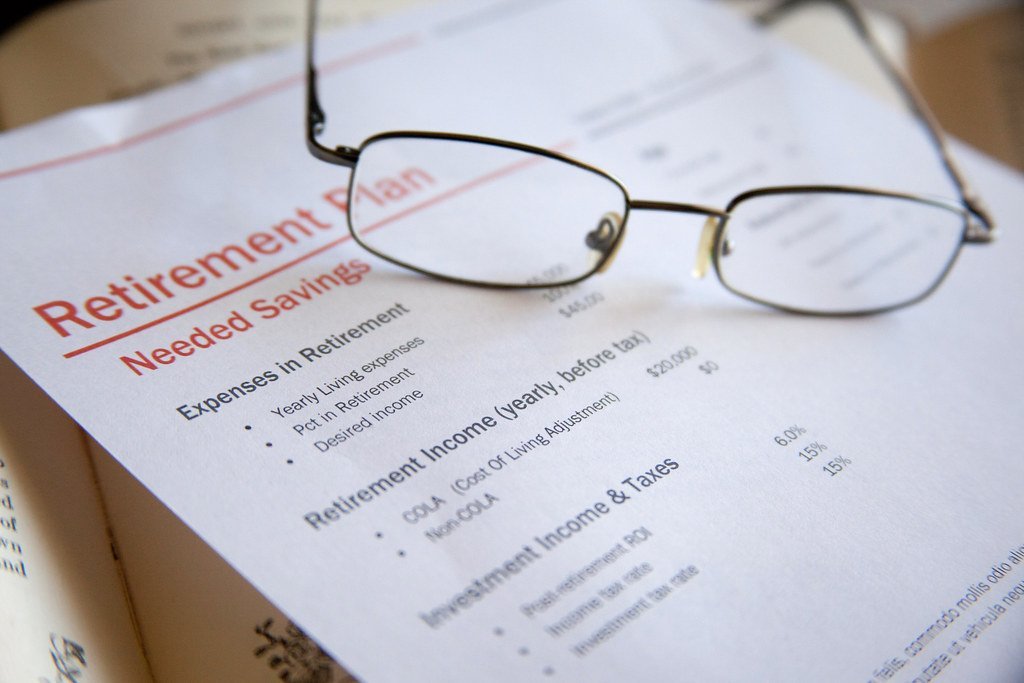
Sometimes it helps to look at the ceiling, the absolute maximum, to understand what’s at stake. If you retire at age 62 in 2026, your benefit would be $2,969. If you retire at age 70 in 2026, your benefit would be $5,181. Those are the bookends. Age 67 sits meaningfully between them, giving you full benefits without the sacrifice of waiting until 70.
On average, retired workers aged 70 received 58 percent more per month than those aged 62, as of December 2024. That’s a dramatic spread. However, roughly 58 percent more per month means nothing if you need the money at 62 or simply don’t expect to live deep into your eighties.
Your full benefits are available starting at age 67, and a bonus of 8 percent per year kicks in if you hold off until age 70. In other words, you’ll receive 124 percent of your full benefits if you wait three more years. For many people, that 24 percent bonus isn’t worth three more years of depleted savings. Age 67 offers 100 percent, and that’s a compelling number to land on.
The COLA Factor: Protecting Your Purchasing Power

Here’s an underrated benefit of waiting until 67 to claim. Every dollar you lock in at 67 is a higher base for future cost-of-living adjustments. Each year, Social Security benefits are adjusted to account for inflation so beneficiaries’ purchasing power doesn’t erode over time. In 2025, the annual cost-of-living adjustment was 2.5 percent, the smallest annual COLA hike since 2021 due to cooling inflation.
Think of it like compound interest but on your monthly benefit. If you lock in a higher base at 67 versus a reduced one at 62, every future COLA adds more actual dollars to the higher starting amount. Over decades, that compounding effect adds up in ways that might surprise you. It’s one of those quiet forces that rewards patience.
The Social Security tax limit in 2026 is $184,500, up $8,400 from $176,100 in 2025. For higher earners still in the workforce approaching 67, this means your continuing contributions are still building your eventual benefit calculation through your highest-earning years, making a 67 claim even more valuable if you work right up to that birthday.
The Future of Social Security and What 67 Means Going Forward
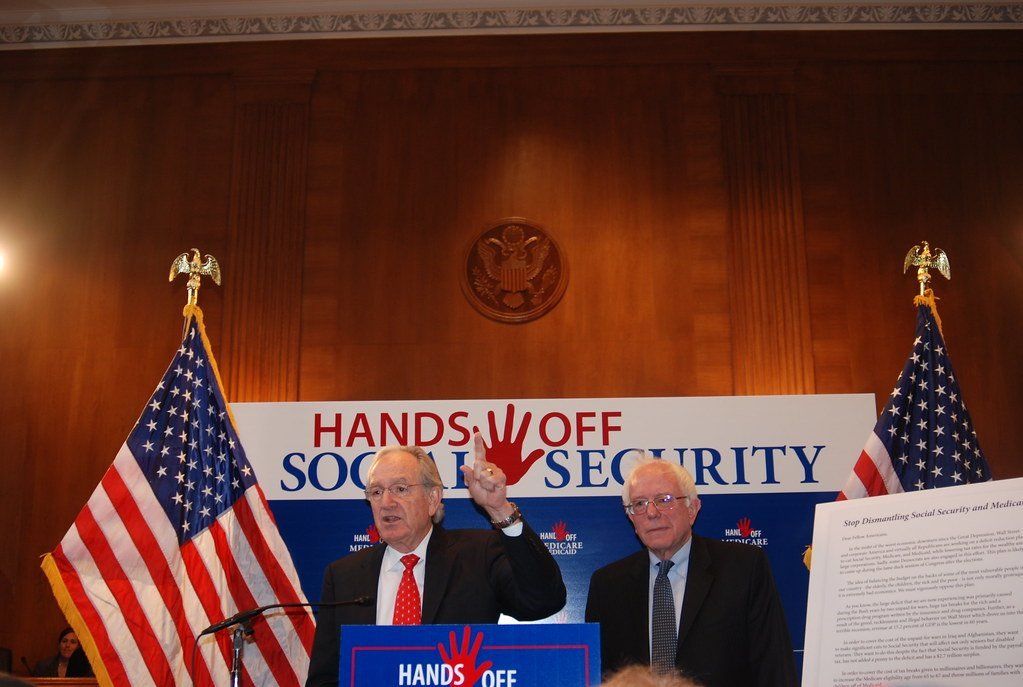
There’s an ongoing political debate about whether the full retirement age will eventually move higher still. The SSA’s Office of the Chief Actuary estimates that enacting a full retirement age reform alone would reduce Social Security’s long-range shortfall by 18 percent. So the pressure to push the number higher is real. Policymakers know it. Most just don’t want to say it out loud in an election year.
Under one studied option, the full retirement age would increase from 67 by two months per birth year for workers born between 1964 and 1981. As a result, for all workers born in 1981 or later, the full retirement age would be 70. That’s the path the Congressional Budget Office has openly modeled. It hasn’t happened yet, but younger workers should keep it in the back of their minds.
An aging population is a major contributor to the problem: In 1960, there were more than five workers paying Social Security taxes per beneficiary, but that ratio has dropped to less than three-to-one. That shrinking ratio explains a lot of the fiscal pressure. For people turning 67 soon, the system still works as designed. The urgency is most acute for those in their forties and fifties planning for a retirement that’s still a decade or more away.
Here’s the bottom line. Age 67 represents a rare moment where the math, the law, and the practical reality of retirement converge. You receive your full benefit, escape the earnings test entirely, lock in a strong base for future inflation adjustments, and break even against early claimers sooner than most people realize. It’s not perfect for everyone, nothing in retirement planning ever is. But for the majority of Americans who can make it work, 67 is genuinely the sweet spot the system was built around.
What age are you targeting for your claim, and does seeing the numbers change anything for you? Tell us in the comments.