
An organizational overhaul for your kitchen and your wallet.

In the dance of household economics, few things are as wasteful as throwing away perfectly good food. It’s a habit that silently siphons money out of our wallets and adds to our environmental footprint. But what if a few simple, strategic tweaks to your kitchen could change that? The key lies not in buying less, but in mastering the art of storage.
These clever hacks transform your kitchen into a well-oiled machine, ensuring every last vegetable and piece of bread is used to its full potential. By taking control of your pantry and fridge, you are taking control of your budget and making a powerful statement against food waste.
1. Store your fresh herbs like a bouquet of flowers.

Fresh herbs can quickly turn into a wilted, brown mess in your fridge, leading to wasted food and money. The key to keeping them vibrant and fresh for longer is to treat them like a bouquet of flowers. Simply trim the stems, place them in a glass with an inch of water, and cover them loosely with a plastic bag before putting them in the fridge.
This simple storage hack keeps your herbs hydrated and happy, extending their life for up to a week. It’s a simple, low-tech trick that ensures you get the most out of your fresh produce, reducing the need to constantly buy more.
2. Wrap your celery and broccoli in aluminum foil.

Celery and broccoli are prone to losing their crunch and becoming limp in the fridge. The secret to keeping them crisp for weeks is to wrap them tightly in aluminum foil before you put them in the crisper drawer. The foil allows the vegetables to breathe while also trapping in just the right amount of moisture.
This simple wrap job prevents the gases that cause spoilage from building up, keeping your veggies fresh and crunchy for a much longer period. It’s a small change that can make a big difference in reducing your food waste and saving you money on groceries.
3. Store potatoes and onions in a cool, dark place.
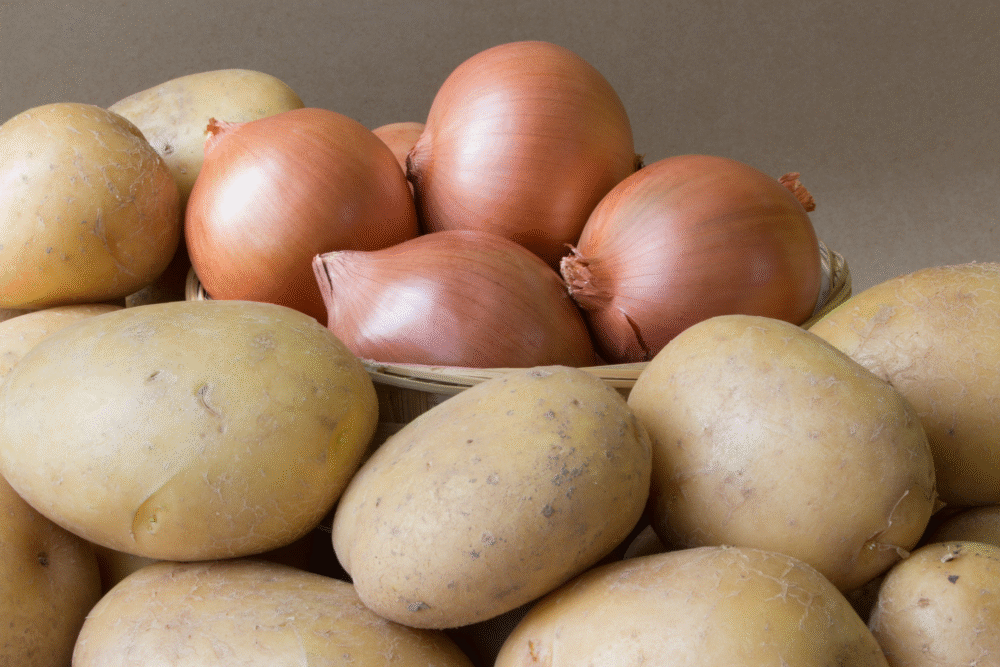
Potatoes and onions should never be stored in the refrigerator, as the cold can quickly cause them to spoil and sprout. Instead, they thrive in a cool, dark, and dry place, like a pantry or a basement. Keep them in a basket or a mesh bag to ensure good air circulation, and store them separately.
Storing them apart is crucial because onions release gases that can cause potatoes to spoil faster. By keeping them in their ideal environment, you can extend their shelf life for several weeks, saving you a significant amount of cash on replacements.
4. Separate your fruits and vegetables.

Many fruits, like apples and bananas, release ethylene gas, a natural ripening agent that can cause other fruits and vegetables to spoil faster. Storing them together in a single crisper drawer is a common mistake that leads to premature spoilage.
The simple solution is to keep your fruits and vegetables in separate drawers or areas of your fridge. This prevents the ethylene gas from affecting your more sensitive produce, ensuring everything stays fresh for longer and reducing the amount of food you have to throw away.
5. Freeze your milk and bread for long-term storage.

If you find yourself frequently throwing away milk that has expired or bread that has gone stale, the freezer is your best friend. You can pour milk into an airtight container and freeze it for several months. Similarly, you can freeze slices of bread and toast them as needed.
This strategy is especially useful for single people or smaller households who may not consume these staples quickly enough. By freezing them, you can extend their shelf life indefinitely, ensuring you never have to waste food or money on these essential items again.
6. Keep your tomatoes on the counter, not in the fridge.
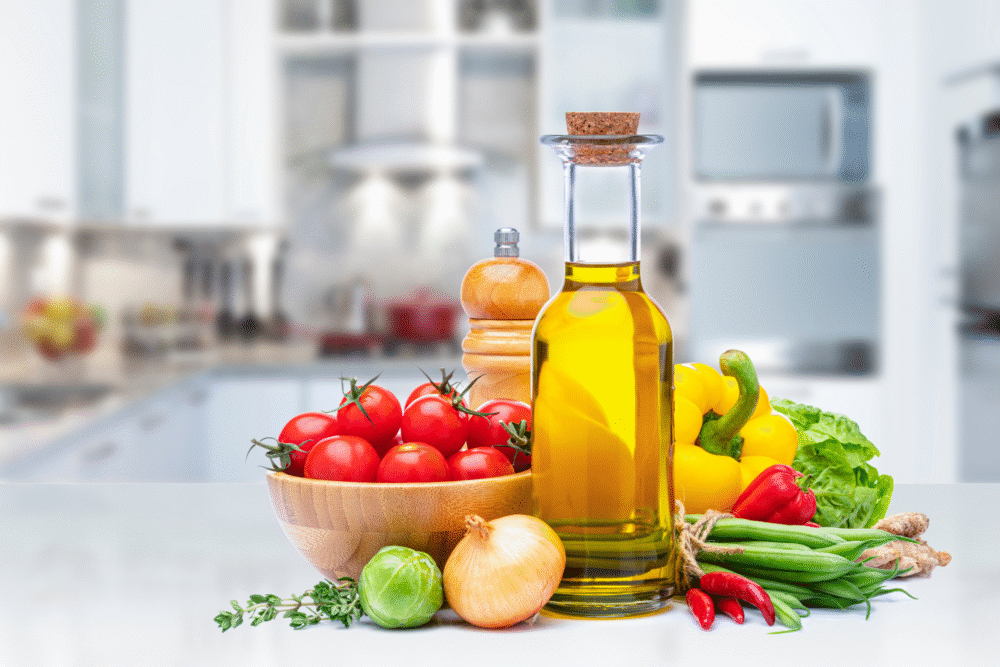
Putting tomatoes in the refrigerator can significantly affect their texture and flavor. The cold air breaks down the membranes, making them mealy and less flavorful. The best place to store them is on the counter, away from direct sunlight, at room temperature.
Storing tomatoes this way allows them to continue to ripen and develop their flavor. This simple change ensures that your tomatoes taste great and that you don’t have to throw them away prematurely, giving you the best bang for your buck.
7. Line your crisper drawer with paper towels.

Your crisper drawer can quickly become a moist environment, which is the perfect breeding ground for mold and bacteria that cause produce to spoil. A simple way to combat this is to line the bottom of the drawer with a few layers of paper towels or a cloth.
The paper towels absorb excess moisture, helping to keep your fruits and vegetables fresh and crisp for a much longer time. It’s a simple, low-cost hack that can make a huge difference in reducing food waste and saving you a few extra dollars on groceries.
8. Use an airtight container for your bread.
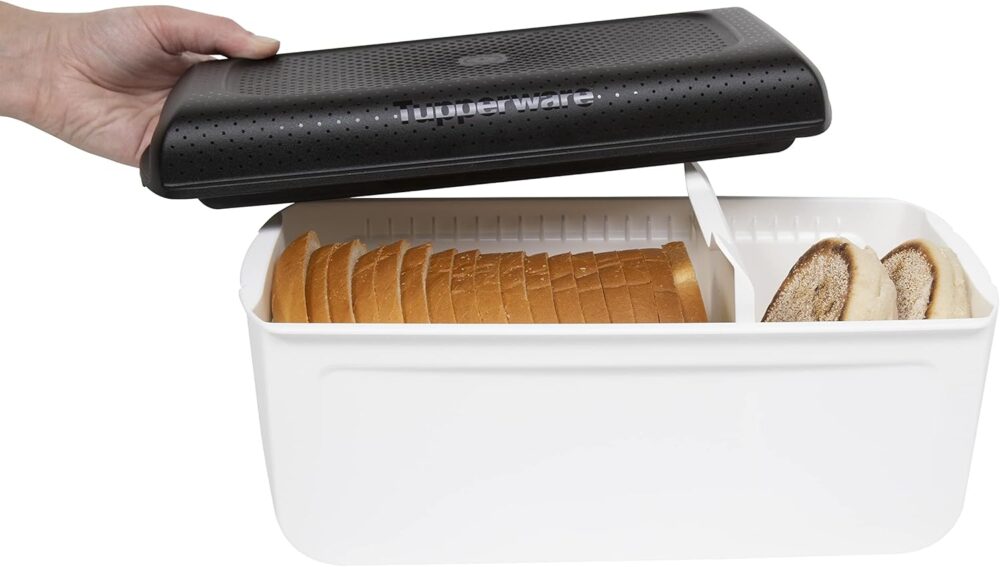
Keeping your bread fresh for longer is a constant battle against mold and staleness. A simple and effective solution is to store your bread in a well-sealed, airtight container at room temperature. This keeps the moisture in and prevents mold spores from getting in.
Avoid storing bread in the fridge, as the cold can make it go stale faster. By using a proper container, you can extend the life of your bread for several days, ensuring you get to enjoy every slice.
9. Store bananas on a banana hanger.
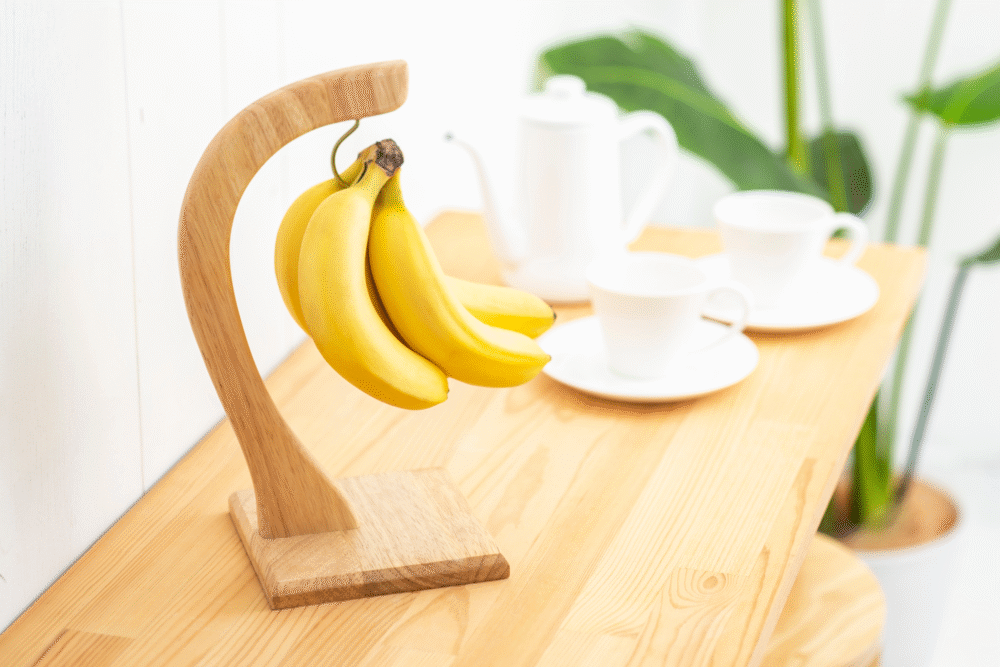
Bananas ripen quickly, and storing them in a bunch on the counter can cause them to spoil even faster. The ethylene gas they release can get trapped, accelerating the ripening process. A simple solution is to use a banana hanger, which allows for better air circulation and reduces bruising.
Hanging your bananas helps them ripen more slowly and evenly, extending their life for a few extra days. This simple storage solution is an inexpensive way to get more time out of your produce and save a little money in the long run.
10. Store mushrooms in a paper bag.
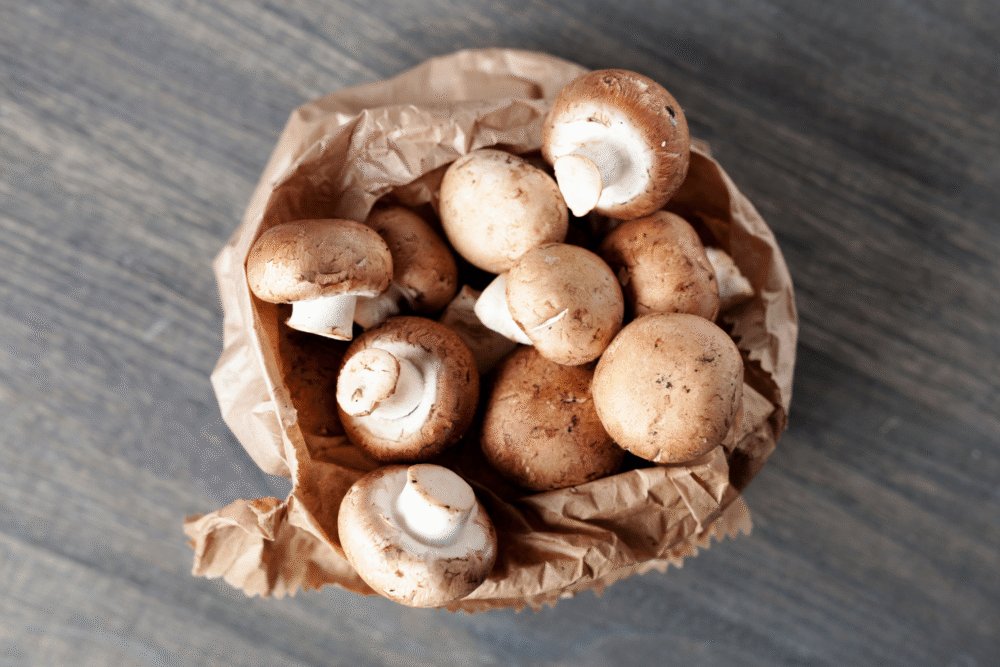
Putting mushrooms in a plastic bag can trap moisture, which leads to them becoming slimy and moldy. The key to keeping them fresh is to store them in a paper bag in your fridge. The paper bag allows them to breathe and absorbs any excess moisture, keeping them dry and firm.
This simple switch in storage can extend the life of your mushrooms for up to a week. It’s a low-cost, effective hack that helps you avoid food waste and ensures your mushrooms are always ready to be used.
11. Turn your strawberries into a vinegar bath.

Strawberries can go moldy in a flash, but a simple vinegar bath can dramatically extend their life. Simply give them a quick soak in a bowl of water with a splash of white vinegar, then rinse them off and dry them completely before storing them in the fridge.
The vinegar kills any mold spores that are already on the berries without affecting the taste. This simple hack can keep your strawberries fresh for a week or more, ensuring you get to enjoy every last one.