

There’s a particular moment every estate liquidator knows well. You walk into a home, and the family proudly points to a china cabinet packed with collectibles, a box of VHS tapes, a shelf of carefully preserved figurines. “These must be worth something, right?” they ask, eyes hopeful. Honestly, most of the time the answer is a quiet, uncomfortable “no.”
You only need to search “Antiques Roadshow fails” to see how owners overvalue things they’ve got lying around their house. Putting aside sentimentality, most antiques or collectibles end up donated or discarded before they net anyone big bucks. The hard truth is that decades of hoarding, overproduction, and shifting tastes have turned many once-prized possessions into glorified clutter. Let’s dive into the items that break hearts at estate sales the most.
1. Formal China Sets and Crystal Glassware

Walk through any estate sale in 2026 and you’ll spot them instantly – towers of boxed china, crystal wine glasses still in original packaging, serving dishes that have never once touched a dining table. They look pristine. They almost never sell.
Most glassware, especially clear glass and antique cut glass crystal, has hit rock bottom. Liquidators have donated more glassware than they care to admit, sometimes even sending it to local “rage rooms” to be smashed. China sets, vases, and crystal collections are suffering a similar fate. The market is flooded, and millennials simply don’t have the space or desire to fill their cupboards with dishware sets.
Even perfect examples of ordinary patterns might sell for just a few dollars per piece at estate sales, compared to the hundreds they commanded in the 1990s collecting boom. If your parents paid a fortune for a complete set of fine china “for special occasions,” I’m sorry to say those occasions may never arrive at the price they hoped.
2. Hummel Figurines

Few items represent the great collectibles crash more painfully than Hummel figurines. These little porcelain children with rosy cheeks were once displayed in glass cabinets with genuine pride. Grandmothers across America treated them like heirlooms. Let’s be real though – they are not heirlooms anymore.
Once the apple of collectors’ eyes, these porcelain pieces have descended from their pedestal. Mass production and a glut of availability have left them languishing in the marketplace, often fetching less than $10 at auctions.
Hummels were originally made in 1935 in Germany and became popular in the United States when soldiers returning from World War II brought them home as gifts. As collectors started buying up the figurines, more were made to fill demand – but it proved to be too many. That’s the collectibles curse in one sentence: the moment something gets popular enough to mass-produce, its value evaporates.
3. Beanie Babies
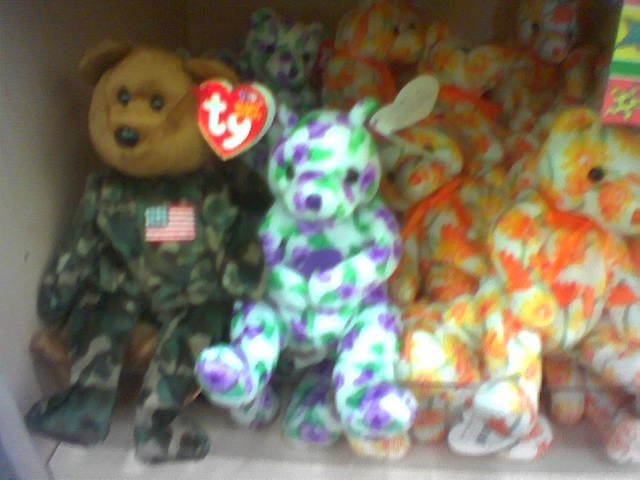
Nothing quite captures the madness of the 1990s collectibles boom like Beanie Babies. People kept them in acrylic display cases. They refused to remove the tags. They fully believed these stuffed animals were going to pay for college. They were not.
The little bean bag animals known as Beanie Babies were created in 1993 and became hot collector’s items by 1995. The creator, Ty Inc., made hundreds of different animals and some limited editions, but by 1999 the craze had ended. Even the rarest of Beanie Babies can now be found for $5 or less.
People going through family estates have found Princess Diana Beanie Babies and gasped – only to check eBay and find them going for around $20 a pop, and still not selling. Think about that. The tag said “limited edition.” The market said “bargain bin.” It’s a story repeated at nearly every estate sale we run.
4. Franklin Mint “Limited Edition” Collectibles
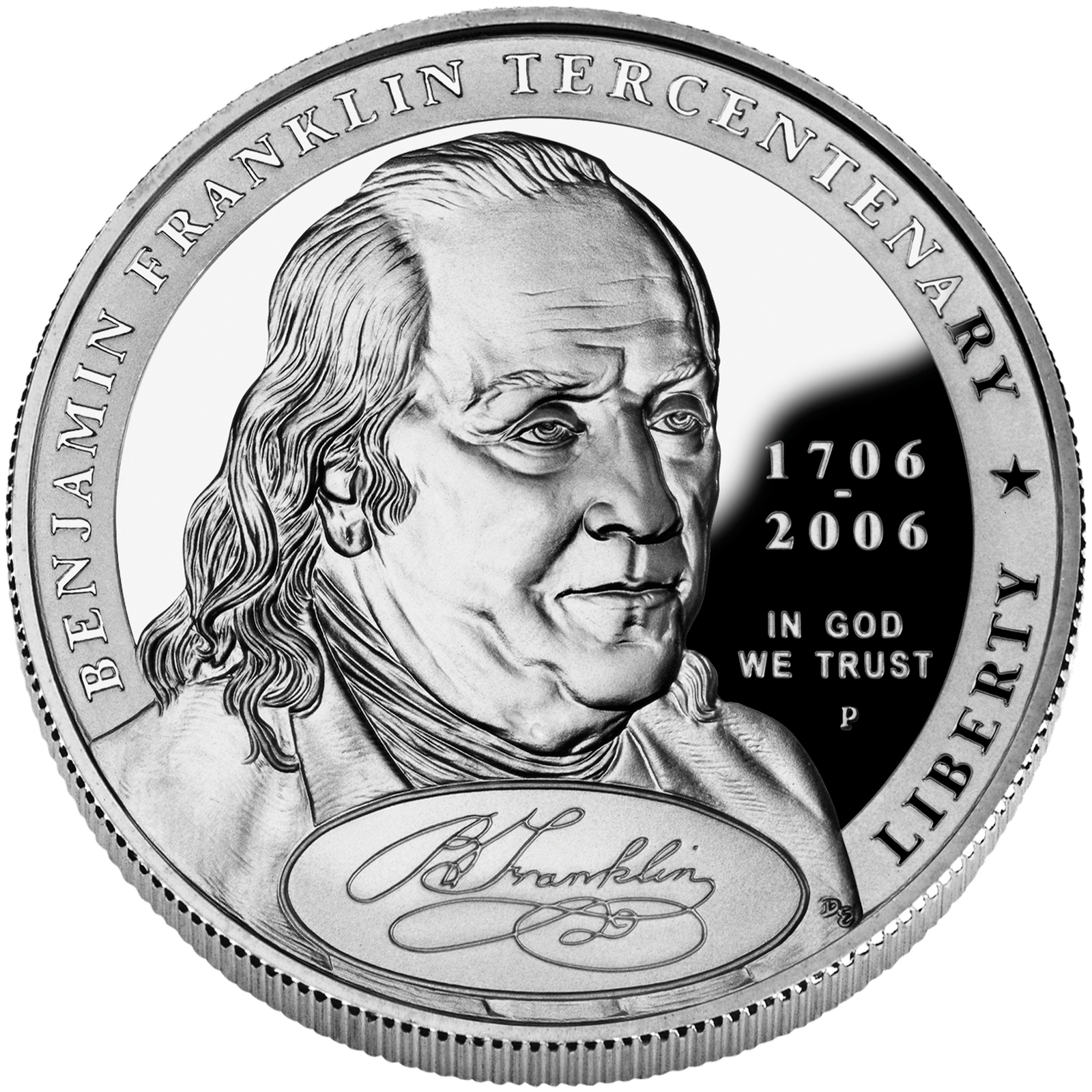
Here’s the thing about anything labeled “limited edition” by a mass-market company: the term is practically meaningless. Franklin Mint plates, coins, dolls, and die-cast cars were sold by the millions with certificates of authenticity and promises of future value. Families believed those certificates. The market did not.
Whether coins, dolls, plates, or die-cast cars, most Franklin Mint and similar releases are worth far less than the original price their customers paid for them. Unfortunately, the certificates of authenticity don’t translate into demand. These were designed to look rare, but they were produced in volume.
Storage units across America hold these once-prized collections that heirs don’t want. Even charity shops sometimes refuse these items due to low demand. The “limited editions” were typically produced in the tens of thousands, making them far from rare. The word “limited” in that context meant limited only by how many people were willing to buy them at the time.
5. Longaberger Baskets

In the 1990s, Longaberger baskets were a status symbol. Homemakers paid hundreds of dollars for handwoven baskets and stored them in dedicated display cases. It sounds extreme now, but the resale market actually supported it – for a while.
Once a household name and a billion-dollar company at its peak around the year 2000, Longaberger baskets are now piling up at estate sales and thrift stores. Oversupply, changing décor tastes, and a younger generation that doesn’t want cabinets of baskets have driven values down, and only unusual or very early examples are attracting collectors’ attention.
Now, they’re selling for around the $20 mark. Collectors themselves recognized the decline, with members of Longaberger trade groups noting the company “priced themselves out of the market” and “overproduced and flooded the market.” It’s a classic boom-and-bust collectibles story, and countless families are still sitting on shelves full of evidence.
6. Antique “Brown Furniture” – Mahogany Dining Sets and Sideboards
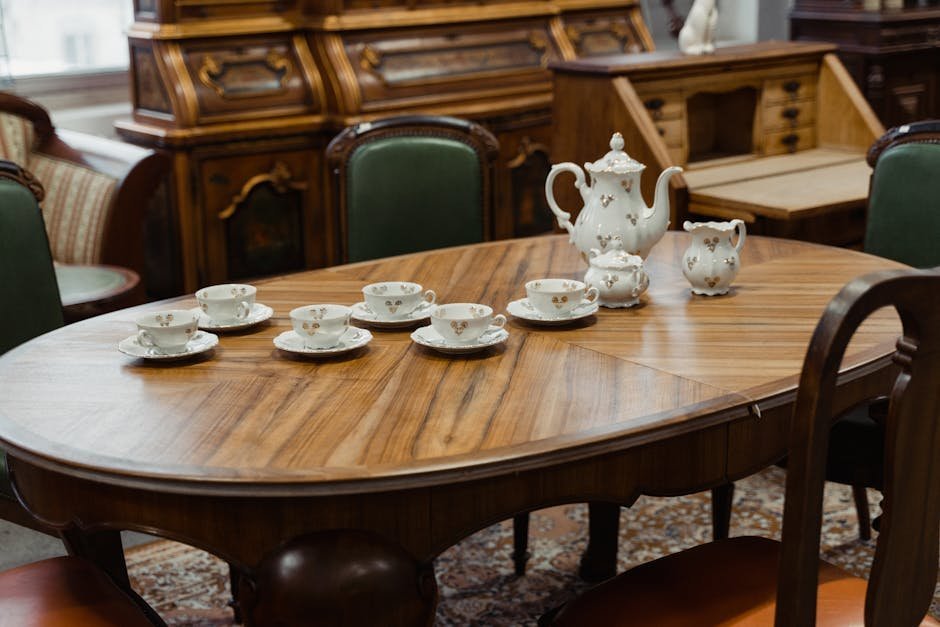
I think this one surprises families the most. They have a beautiful, solid mahogany dining table that their parents bought for a small fortune. It’s sturdy, real wood, built to last a century. It must be worth something, right? Apparently not to anyone under forty.
Dining room furniture is essentially dead in the resale market. These days, meals happen on the couch, in front of the TV, or on the go, leaving formal dining sets gathering dust. Mahogany dining tables, chairs, and sideboards that were once coveted pieces are now hard to sell – or even give away.
“Brown furniture” is a catchall term in the antiques trade for sturdy, dark-wood pieces such as cabinets, sideboards, dining tables, and bedroom sets. Museum-quality work by noted designers commands the prices one might hope, but everyday home furnishings from the late 19th and early 20th centuries have taken a hit. Today, art deco and midcentury modern pieces are in demand. A walk through many an antique shop will find the old brown pieces relegated to the back or basement, with price tags to match.
7. VHS Tape Collections

You’ve probably seen the headlines: a sealed copy of Star Wars sold for over $100,000. A Back to the Future tape fetched tens of thousands at auction. So your parents’ collection of 200 VHS tapes must be sitting on a goldmine, right? Slow down. That’s not how this works.
Certain horror titles and some Disney “Black Diamond” editions make headlines, but the majority of VHS tapes are functionally worthless. Unless they’re sealed, rare, or tied to cult fandom, most tapes are bound for the bargain bin.
A collector website notes that rare and valuable VHS tapes often derive their premium from limited production runs, banned editions, or tapes never released on DVD or streaming. As AntiqueTrader warns, “the majority of VHS tapes are functionally worthless” unless they meet at least one of those rarity or condition boosters. That well-watched copy of Titanic or Forrest Gump? Worth maybe a dollar at a yard sale, if that.
8. Special-Edition Barbies and Mass-Market Dolls

The late 1990s and early 2000s saw a wave of “special edition” Barbies marketed specifically to collectors and investors. Families kept them in boxes, never opened. They were certain these dolls were going to be worth a fortune. The data tells a different story entirely.
Special-edition Barbies from the late 1990s and 2000s were churned out in staggering numbers, and both the primary and secondary markets are saturated. Unless the doll is tied to a true rarity, prototype, or pristine early edition, resale demand is low.
In Q2 2025, Mattel reported a roughly one-fifth drop in Barbie and doll category revenue compared to the previous year. Dolls, once beloved and highly collectible, have taken a hit across the board. Madame Alexander dolls and similar brands, which were once worth a lot, are nearly impossible to sell. The box may say “collector’s edition,” but the market has moved on without a second glance.
What do you think – did any of these surprise you? Have you gone through a parent’s belongings and found a collection you thought was valuable? Tell us about it in the comments.